Clicky

OffGrid Power Hub - Professional Blue-Gray Theme
Wattson mascot TARIFF ALERT: Solar prices rising 25-40% in 2025 - Secure American-made independence NOW
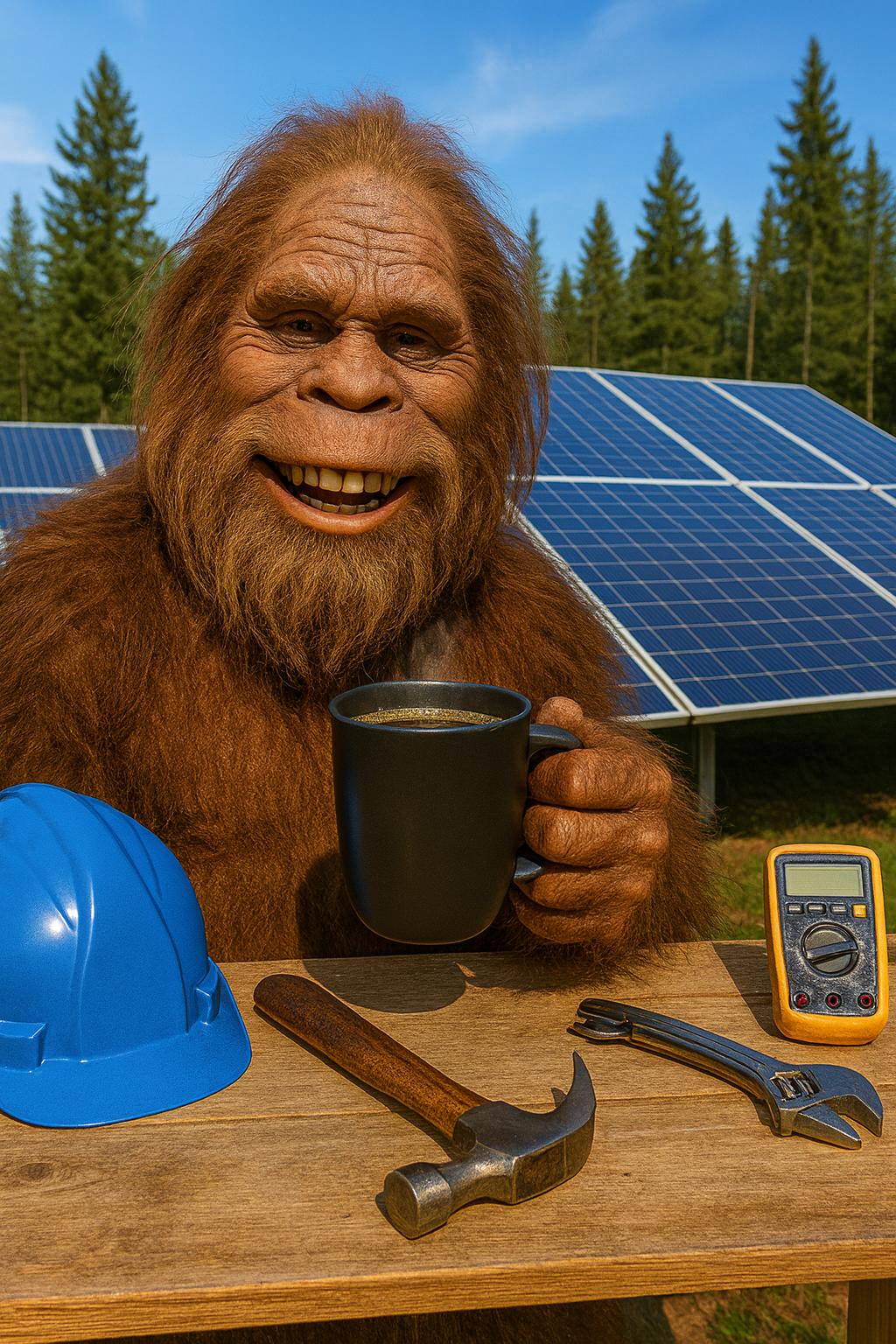
Wattson the off-grid sasquatch mascot - OffGrid Power Hub logo
Energy Independence
for American Patriots
Ground Mount Solar: DIY Installation Guide ($2,400 Savings) | OffGridPowerHub

Ground Mount Solar: DIY Installation Guide

Expert techniques for site selection, foundations, and the critical height secrets that installers won't share. Save $2,400+ in labor costs.

⚡ TL;DR: The Bottom Line

Ground mount solar costs 20-30% more initially. Worth it. Better performance. Easier maintenance. No roof penetrations. Recovery in 3-5 years.

Critical rule: Minimum 4 feet clearance. Anything less kills maintenance access. Creates vegetation nightmares. Causes snow problems.

Foundation reality: Concrete footings below frost line. 12" diameter minimum. 3,000 PSI concrete. 48-hour cure before loading.

🛠️ FREE Complete DIY Solar Installation Guide

Professional installation techniques. Site planning worksheets. Foundation specifications. Avoid $15,000 contractor disasters.

GET INSTALLATION GUIDE FREE →

✅ Site planning ✅ Foundation specs ✅ Expert techniques

Ground Mount Solar vs Roof Mount: Real Trade-offs

Ground mount solar isn't just "easier" than roof installation. It's fundamentally different. Different advantages. Different challenges. Most advice treats them as equivalent. That's dangerously misleading.

After installing both types, I'll share what actually matters. The choice isn't convenience. It's long-term functionality. Maintenance reality. Hidden costs that surface years later.

✅ Ground Mount Advantages

  • Maintenance access: No climbing required
  • Optimal orientation: Perfect south-facing always
  • Better cooling: Air circulation improves efficiency
  • Easy expansion: Add panels without roof concerns
  • No penetrations: Zero roof leak risk
  • Snow shedding: Steep angles clear naturally

⚠️ Ground Mount Challenges

  • Land required: Need open space without shade
  • Foundation costs: Adds $500-1,500 to project
  • Wire distance: Longer runs increase costs
  • Vegetation battle: Ongoing weed management
  • Security concerns: More visible and accessible
  • Zoning issues: Some areas restrict installations

⚠️ The Hidden Cost Reality

Initial cost: Ground mounts run 20-30% more than roof. Foundations and wire runs add up.

Long-term value: Ground mounts save money over 25 years. Easier maintenance. Better performance.

Break-even point: Most systems recover extra cost within 3-5 years.

🎯 Expert Insights: What Professionals Won't Tell You

Installed dozens of ground mount solar systems. Made costly mistakes. Here's what professionals keep to themselves. Either they don't know. Or it's not profitable to share.

1. The 4-Foot Height Rule (Critical)

Minimum 4 feet clearance. Ground to bottom of panels. Here's why this matters:

  • Panel replacement: You need room underneath. Tight clearances make replacement impossible.
  • Vegetation control: Panels attract weeds. Need space for tools and maintenance.
  • Snow management: Snow slides off. Piles underneath. Insufficient clearance buries panels.
  • Air circulation: Proper clearance keeps panels cooler. More efficient.

Professional reality: Most installers recommend 2-3 feet. Saves money on hardware. False economy. Costs thousands in maintenance over 25 years.

2. The Vegetation Nightmare

Ground mount solar creates perfect growing conditions. Shade and wind protection. Your array becomes a botanical garden. Destroys systems if unmanaged.

  • Shade creep: Vegetation grows tall enough to shade panels. Output drops 20-50%.
  • Climbing plants: Vines climb structures. Grow over panels.
  • Root damage: Tree roots undermine foundations. Shift alignment.
  • Fire hazard: Dry vegetation near electrical equipment. Dangerous.

Solution: Concrete pad under entire array. Or aggressive vegetation management every 6-8 weeks.

3. Site Selection Mistakes

Choose based on ALL-DAY sun exposure. Not just peak hours. I've seen systems lose 30% potential. Installers only checked midday sun.

  • Morning shade: Eastern obstructions delay startup by hours.
  • Afternoon shade: Western obstructions cut peak production.
  • Seasonal changes: Winter-clear trees block summer sun.
  • Future growth: That small tree grows 20 feet in 10 years.

🔋 Need Help Sizing Your System?

Free Solar Estimator calculates exact system size for your property. Avoid costly oversizing mistakes. Used by 15,000+ patriots.

Calculate System Size FREE →
STEP 1
⏱️ Time: 1-2 days

Site Selection & Sun Path Analysis

Site selection determines 80% of long-term performance. Get this wrong. No expensive equipment saves your project. Not just finding sunny spots. Understanding solar geometry. Future shading risks.

Sun Path Assessment

  • Solar pathfinder analysis: Map exact sun paths year-round
  • Shade study: Document shading at 9 AM, noon, and 3 PM
  • Future growth: Account for tree growth and construction
  • Seasonal variations: Winter sun is 47° lower than summer

Site Preparation Requirements

  • Drainage assessment: Avoid low spots collecting water
  • Soil testing: Verify support for concrete foundations
  • Utility clearances: Required distances from power lines
  • Access planning: Equipment and maintenance vehicle access

✅ Pro Tip: Shadow Rule

No shadows on panels between 10 AM and 2 PM. Year-round. Visit site multiple seasons before finalizing. Leave space for expansion. Plan maintenance vehicle access.

STEP 2
⏱️ Time: 1-2 days

Foundation & Site Preparation

Foundation work determines survival. First major storm tests everything. Proper foundations last decades. Cheap shortcuts fail catastrophically. Don't cut corners here.

Foundation Type Selection

  • Concrete footings: Most reliable. Required for frost areas.
  • Helical piers: Good for rocky soil. Professional installation.
  • Ground screws: Fast installation. Stable soils only.
  • Ballasted systems: No excavation. Requires enormous concrete blocks.

Concrete Footing Specifications

  • Depth: Below frost line plus 6 inches minimum
  • Diameter: 12" minimum. 16" for high wind areas.
  • Concrete mix: 3,000 PSI minimum. Fiber reinforced.
  • Anchor bolts: Precise positioning critical for fit
  • Curing time: 48 hours minimum. 7 days for full strength.

✅ Foundation Pro Tips

Over-engineer foundations. Double recommended size. Cheap insurance. Use Sonotube forms for smooth footings. Install conduit sleeves during pour. GPS mark locations. Photo everything before covering.

STEP 3
⏱️ Time: 1-2 days

Mounting System Installation

Mounting requires precision. Attention to detail. Small alignment errors compound across array. Makes panel installation difficult. Sometimes impossible.

Mounting Structure Assembly

  • Frame assembly: Assemble on ground before lifting
  • Alignment verification: String lines and levels required
  • Torque specifications: Follow manufacturer requirements exactly
  • Height verification: Confirm minimum 4-foot clearance

Rail Installation Process

  • Starting point: Begin with most accessible corner
  • Level verification: Each rail must be perfectly level
  • Parallel alignment: All rails exactly parallel
  • Spacing accuracy: Must match panel mounting holes

⚠️ Quality Control Checklist

Test frame stability before panels. Double-check all dimensions. Verify all bolts properly tightened. Final check of level and square. Install grounding conductors.

🦶 Wattson's Wisdom: Ground Mount Reality

Ground mount solar wins long-term. Higher upfront cost. Better 25-year value. Easier maintenance. Better performance. Worth the investment.

My recommendation: Don't skimp on foundations. Use 4-foot minimum height. Plan for vegetation management. Your future self thanks you.

Need location-specific guidance? Ask our Solar Intel Advisor about your area.

Long-term Ground Mount Solar Maintenance

Ground mount solar requires different maintenance than roof systems. Planning for 25 years of vegetation. Cleaning access. Component replacement. Saves thousands long-term.

Vegetation Management Strategy

  • Concrete pad: Best option. Eliminates vegetation entirely.
  • Gravel base: 4-6 inches with landscape fabric.
  • Regular mowing: Every 6-8 weeks during growing season.
  • Herbicide application: Selective treatment for persistent weeds.

Cleaning Access Design

  • Water source: Install hose bib near array
  • Tool storage: Dedicated storage for cleaning equipment
  • Access paths: Clear paths around entire array
  • Lighting: Install lights for winter maintenance

Component Replacement Planning

  • Panel access: Design allows removal without disassembly
  • Inverter location: Easy access for cooling and replacement
  • Wiring accessibility: Junction boxes accessible for troubleshooting
  • Heavy equipment: Vehicle access for major components

❓ Frequently Asked Questions

How high should ground mount solar panels be?
Minimum 4 feet from ground to panel bottom. Allows maintenance access, vegetation control, snow clearance. Most installers recommend 2-3 feet to save money. False economy costing thousands long-term.
How much does ground mount solar installation cost?
Ground mount costs 20-30% more than roof mount. Typical DIY cost: $1.50-2.50 per watt. 6kW system runs $9,000-15,000. Professional installation adds $2,400-4,000 labor.
What foundation type is best for ground mount solar?
Concrete footings most reliable for frost areas. Dig below frost line plus 6 inches. 12" diameter minimum, 16" for high wind. 3,000 PSI concrete with fiber reinforcement.
How do I prevent vegetation from shading panels?
Best option: concrete pad under entire array. Alternative: 4-6 inches gravel with landscape fabric. Budget option: regular mowing every 6-8 weeks plus selective herbicide.
Is ground mount better than roof mount solar?
Ground mount offers easier maintenance, optimal orientation, better cooling, no roof penetrations. Higher initial cost but typically recovers within 3-5 years through better performance.

🛠️ Ready to Build Your Ground Mount System?

Complete DIY Installation Guide. Site planning worksheets. Foundation specifications. Expert techniques ensuring decades of reliable power.

GET COMPLETE GUIDE FREE →

✅ Site planning ✅ Foundation design ✅ Expert techniques