 TARIFF ALERT: Solar prices rising 25-40% in 2025 - Secure American-made independence NOW
for American Patriots
Off-Grid Living Exposed: Real Costs, Hidden Failures, What Works
The rancher watching his utility bill climb. The parent who lost a freezer full of food. The veteran who refuses to depend on a failing grid. This is for all of you.
The short version: Off-grid living combines solar power, water independence, food storage, and security into one system. It costs $15K to $50K upfront. It saves $3,600 to $7,200 per year. Our 12-pillar system covers every piece.
Who this is for: The homeowner tired of rising utility bills. The prepper building real resilience. The rural family outside a 30-minute response zone.
The main takeaway: True independence is not about rejecting technology. It is about controlling your own systems instead of paying corporations to control you.
About Wattson: Your Off-Grid Guide
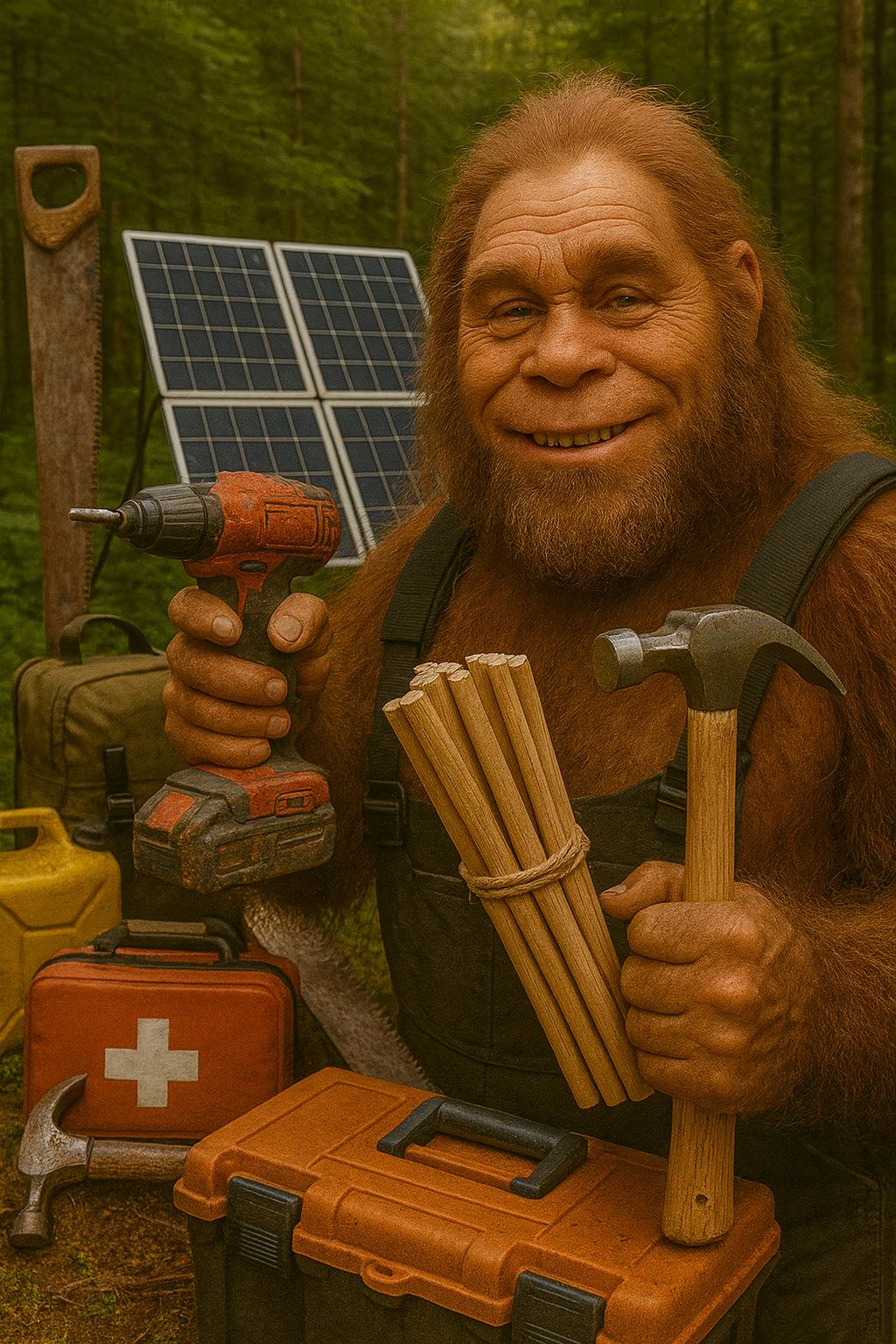
Wattson founded OffGridPowerHub after his $800 electric bill wake-up call. Trained at the US Solar Institute for Electricians. Licensed General Contractor. 13+ years off-grid living experience. He has designed off-grid installations nationwide.
- Trained at US Solar Institute. 13+ years off-grid.
- Licensed General Contractor. Designed installations nationwide.
- Consultant for preparedness communities.
"I teach what works when the grid fails and your family is counting on you."
- The Awakening: When the System Shows Its Face
- From Grid Slave to Freedom Fighter
- Why Off-Grid Living Is the Future
- The 12 Pillars of Complete Independence
- How to Start: 5-Step Process
- Solar Foundation (Pillars 1 to 6)
- Survival Systems (Pillars 7 to 8)
- Self-Sufficiency (Pillars 9 to 12)
- Surviving Every Season Off-Grid
- The Complete Off-Grid Living Transformation
- Why Old Ways Are Future-Proof
- Your Off-Grid Living Path Forward
- Supporting Resources
The Awakening: When the System Shows Its Face
It started with a simple goal. Stick it to the electric company. Build a new home. Cut those utility bills. What happened next shattered every assumption about independence.
That first electric bill hit $600. Brand-new home. Energy-efficient design. Six hundred dollars. That was not just expensive. That was financial warfare.
But the real lesson came later. The problem was not the electric company alone. The problem was depending on any system that holds your family hostage.
Picture the father watching his daughter do homework by flashlight. The grandmother opening a freezer full of ruined insulin. The rancher in Oklahoma losing $3,000 in frozen beef because the power company "hopes to restore service within 72 hours." Off-grid living eliminates that vulnerability permanently.
According to the U.S. Department of Energy, grid failures affect 5.7 million customers annually. Average outage lasts 3 to 7 days. FEMA reports that extreme weather events have increased fivefold since the 1970s. The grid was not built for this.
Key Independence Facts
- Average household spends $125 to $175 monthly on electricity
- Grid failures affect 5.7 million customers per year
- Self-reliance cuts monthly costs $300 to $600
- Complete energy independence eliminates rate hike exposure
- Self-reliant families report 73% higher preparedness confidence
Wattson's Wake-Up Call
"The utility companies are not incompetent. They are brilliant. They built a system where you pay them to keep you dependent. Then they raise prices because what are you going to do? Light candles? Time to design your own system."
From Grid Slave to Freedom Fighter
The Comfort Zone
New home. New life. New beginning. Everything by the playbook. Work hard. Save money. Build the dream house. The electric bill was supposed to be easy.
Reality Hits Your Wallet
Month one: $80. Month two: $200. Month three: $400. Month four: $600. By month six, those bills could fund a small war.
The System Is Rigged
Electricians who did not understand solar. Contractors who wanted to "manage" independence. Permit offices demanding paperwork to generate power on your own land. Every direction, someone had their hand out.
Stop Asking Permission
That is when enrollment at the US Solar Institute happened. Not to become an electrician. To stop letting other people control the family power supply. Independence requires building it yourself.
The First Victory
Three months without a utility bill. No sparks. No failures. Just reliable self-generated power. That morning changed everything. This was not about electricity anymore.
From Consumer to Creator
Solar was the beginning. Break free from one dependency and you see them everywhere. Food. Water. Security. Communication. Every system designed to keep you paying and powerless.
Building a Movement
OffGridPowerHub was born from action. Rage at a system profiting from powerlessness. Hope that Americans remember what off-grid living and real independence look like.
Why Off-Grid Living Is the Future of Independence
The National Renewable Energy Laboratory confirms it. Distributed solar increases grid resilience. It reduces dependence on centralized power generation. For off-grid living, that means complete energy sovereignty.
Why Families Break Free From the Grid
- Protection from grid failures and infrastructure attacks
- Immunity from utility rate increases averaging 2 to 4% yearly
- Self-reliant food production and preservation
- Independent water sources protected from contamination
- Property security you control. Not a monitoring company.
- Financial freedom from monthly subscription dependencies
Independence vs. Prepping
Prepping focuses on surviving temporary disruptions. Off-grid living creates permanent independence. You build systems that continuously provide. You prepare for life. Not just crisis.
Ready to Size Your Solar System?
The homeowner staring at a $400 electric bill deserves a real answer. Get the exact calculation for your property.
GET YOUR FREE SOLAR CALCULATORThe 12 Pillars of Complete Independence
A solar project evolved into something bigger. A complete blueprint for American independence. After years of testing, failing, and perfecting, twelve core systems emerged.
These are not survival skills. These are off-grid living sovereignty skills. Each pillar represents a choice. Independence over dependency. Self-reliance over corporate control.
How to Start Off-Grid Living: 5-Step Process
The path to independence follows a proven sequence. Minimize risk. Build capabilities systematically. This process has guided thousands of families to success.
Complete Independence Implementation
Calculate Energy Independence Needs
Use our free solar calculator. Measure current usage. Add 20% safety margin. Most families need 6 to 12kW solar capacity.
Design Your Solar Foundation
Size panels, batteries, and inverters. Follow our system design guide. Plan 3 to 5 days battery backup minimum.
Secure Water Independence
Establish reliable source. Well, spring, or cistern. Storage: 500 to 1,000 gallons minimum. Multi-stage purification. Our water systems guide covers options.
Build Food Security
Create 3 to 6 month storage. Pressure canners, dehydrators, root cellars. Our food storage guide provides strategies.
Implement Security and Communication
Perimeter security. Backup communication. Satellite internet for grid-independent connectivity. Our security hardening guide covers it.
Critical Warning
Never go fully off-grid overnight. Build systems gradually. Maintain grid connection as backup. Test each system before depending on it. Rushing leads to expensive failures.
Surviving Every Season Off-Grid
Your off-grid living independence cannot depend on fair weather. Every season tests your systems differently. The family who only prepares for winter gets blindsided by summer. The one who ignores spring storms loses equipment to flooding. Year-round preparedness is the only kind that works.
Winter: The Cold Truth
The National Renewable Energy Laboratory confirms solar works in cold weather. Output drops, but proper design compensates.
Winter Reality Check
Solar drops 40 to 60%. Battery capacity falls 20 to 30% in cold. Water lines freeze and burst. Your systems must account for this.
| Component | Winter Fix | Cost |
|---|---|---|
| Solar Panels | Increase capacity 50 to 75% | $2,000 to $4,000 |
| Battery Bank | Insulated box + heating | $500 to $1,200 |
| Water Lines | Underground or heated pipes | $800 to $2,000 |
| Backup Generator | Dual-fuel propane/gas | $800 to $2,500 |
Summer: Heat Kills Equipment Too
Most people planning off-grid living prepare for cold. Few plan for heat. That is a mistake. Batteries overheat above 95 degrees. Inverters throttle output. Water demand doubles. Food storage becomes a race against spoilage.
Solar panels lose 0.3 to 0.5% efficiency per degree above 77F. A panel rated for 400 watts produces 360 to 380 watts on a 100-degree day. Your system design must account for this thermal loss.
Summer Survival Priorities
- Battery ventilation. Heat kills lithium cells faster than cold.
- Water storage doubles. Plan 150 to 200 gallons per person per month.
- Food preservation shifts. Dehydration outperforms canning in heat.
- Shade structures over panels. Reduces thermal loss 10 to 15%.
- Backup cooling. Even a 12V fan prevents heat exhaustion at night.
Spring: Storm Season Stress Test
Spring brings the highest risk of combined threats. Flooding. Hail. Tornadoes. Lightning strikes on solar arrays. High winds ripping unsecured panels off roofs.
This is when your surge protection earns its money. Lightning hits a panel array and the charge travels through wiring into your battery bank. Without proper grounding and surge arrestors, one storm destroys $10,000+ in equipment.
Spring Preparedness Checklist
- Inspect all mounting hardware. Winter loosens bolts.
- Test surge protection and grounding before storm season.
- Clear drainage around battery enclosures. Flooding kills banks.
- Check roof seals around panel mounts. Leaks start small.
- Service generator. You will need it during multi-day storms.
Fall: The Preparation Window
Fall is your last chance to fix what summer broke and prepare for what winter brings. Smart off-grid living families treat September through November as maintenance season. Not relaxation time.
Fall Maintenance Priorities
- Deep-clean solar panels. Summer dust cuts output 15 to 25%.
- Full battery health check. Replace weak cells before cold hits.
- Winterize water lines. Insulate, heat-tape, or drain exposed sections.
- Stock 90 days of food. Supply chains tighten in winter months.
- Test backup heating. Verify propane levels and wood supply.
Year-Round Gear We Actually Use
Backup Power: Dual-fuel generators run on propane and gasoline. Propane stores indefinitely. Works in sub-zero when gasoline fails.
Water Filtration: Gravity-fed systems work without electricity. No pump dependency. Works every season.
Food Preservation: Pressure canners work on any heat source. Wood stove. Propane. Campfire. Electric does not matter.
Affiliate disclosure: Some links earn us a small commission at no extra cost. We only recommend products we personally use and test.
For complete maintenance procedures, see our maintenance and troubleshooting guide.
Get the Complete Buyer's Checklist
Every component. Every cost. Every mistake to avoid. The family in Montana who sized their system wrong spent $6,000 fixing it. This checklist prevents that.
GET YOUR FREE CHECKLISTThe Complete Off-Grid Living Transformation
Master all 12 pillars and something profound happens. You stop being a consumer. You become a creator. You stop asking permission. You take responsibility.
Signs You Have Achieved Real Independence
- Property generates all power needed. 3 to 5 days backup.
- Water systems provide clean supply from your own source.
- Food storage sustains your family 3 to 6 months.
- Security systems protect without corporate monitoring.
- Communication works without cell towers or cable.
- Monthly operating costs under $200 vs. $800 to $1,500 grid-dependent.
The Physical Transformation
Your property becomes a fortress. Solar panels feeding battery banks. Water systems that never fail. Food storage for months. Security that protects instead of monitors.
The Financial Transformation
Every month without utility bills is money kept. Every crisis weathered without overpriced supplies is wealth preserved. Every system maintained yourself is money not paid to contractors.
Wattson on Real Wealth
"Real wealth is not having more money. It is needing less of it. Because you control your own systems. That is the transformation from victim to victor."
Why Old Ways Are Future-Proof
The bitter irony. Survival wisdom our grandfathers carried in calloused hands. Skills we traded for convenience. Turns out those skills were the blueprint for reclaiming freedom in a fragile modern world.
Our grandfathers did not Google "how to preserve food." They knew because survival depended on it. They were not practicing off-grid living. They were just living.
What We Lost
We traded skills for subscriptions. Independence for algorithms. We let corporations convince us that basic survival skills were beneath us.
What Off-Grid Living Reclaims
The best of both worlds. Grandfather wisdom enhanced with modern technology. Solar panels instead of kerosene. Modern water filtration instead of hoping the well stays clean.
Traditional Skills + Modern Technology
- Food preservation: Traditional canning + modern dehydrators
- Water security: Well-digging wisdom + contemporary filtration
- Power generation: Mechanical knowledge + solar technology
- Building skills: Carpentry fundamentals + modern materials
Your Off-Grid Living Path Forward
Every master of independence started with one step. One solar panel. One month of food stored. One water filter installed. The off-grid living path is not traveled overnight. It is built one system at a time.
Choose Your Starting Point
Electric bills killing you? Start with solar fundamentals. Food security concerns? Start with food storage. Water worries? Start with water systems.
Build Systematically
Each pillar supports the others. Solar powers your water pumps. Food storage feeds your family during installations. Tools maintain all systems. Security protects all investments.
For location-specific guidance, access our OffGridPowerHub GPT. Enter your zipcode for custom permit requirements and local recommendations.
Supporting Resources and Guides
Core Independence Resources
Ultimate Guide to Off-Grid Living provides the complete beginner roadmap. For 103+ answered questions, see the Complete Off-Grid Living FAQ.
Emergency Supplies We Use
We only recommend products we personally use and test. These links help support our mission:
Long-Term Food Storage for complete food independence. Water Filtration Systems for professional-grade purification. Backup Power Generation for reliable emergency power.
Affiliate disclosure: Some links earn us a small commission at no extra cost to you.
Extend This Guide with AI
Get personalized guidance for your specific location. Permits. Regulations. Climate-specific modifications. Try our OffGridPowerHub GPT. Enter your location for custom recommendations.
Your Independence Questions Answered
How much does off-grid living cost to start?
Initial setup costs range from $15,000 to $50,000. Solar runs $8,000 to $15,000. Water systems cost $3,000 to $8,000. Food storage adds $2,000 to $5,000. Most families break even in 3 to 7 years through eliminated utility bills.
Is off-grid living legal in America?
Most rural areas allow it. Some municipalities restrict through building codes requiring grid connections. Research local zoning laws first. Our OffGridPowerHub GPT checks requirements by location.
Will my family be safe off-grid?
Off-grid living can be significantly safer when done correctly. You control your security, food, water, and power. See our security hardening guide for proven strategies.
How do I handle medical emergencies off-grid?
Satellite communication for emergencies. Comprehensive first aid training. Strategic location within helicopter range of trauma centers. See our emergency preparedness guide.
Can I keep internet access off-grid?
Yes. Satellite internet provides reliable connectivity anywhere. Combined with solar, remote work is fully achievable.
What happens when equipment breaks?
Equipment redundancy prevents total failure. Stock replacement parts. Build modular systems. One failure should not crash your entire setup.
How do I convince my family to go off-grid?
Start with financial benefits. Show utility bill savings. Begin with small visible projects. Solar backup power or water filtration. Let results speak.
Which season is hardest for off-grid living?
Every season has challenges. Winter drops solar 40 to 60%. Summer overheats batteries and doubles water demand. Spring storms damage equipment. Fall is your critical maintenance window. Year-round planning beats single-season preparation.
How long to become completely off-grid?
1 to 3 years typically. Start solar at 3 to 6 months. Add water at 6 to 12 months. Food security is ongoing. Rushing leads to expensive mistakes.
What is the real lifespan of off-grid equipment?
Solar panels: 25 to 30 years. LiFePO4 batteries: 8 to 12 years. Inverters: 8 to 12 years. Proper maintenance extends all lifespans significantly. A $100/year battery maintenance routine prevents $8,000+ replacement.
Key Takeaways for Independence
Essential Success Factors
- This system combines solar, water, food, and security. The 12-pillar system covers complete transformation.
- Winter requires specialized modifications. Solar capacity increase 50 to 75%. Battery insulation. Water freeze protection.
- Equipment planning prevents costly failures. Panels last 25 to 30 years. Batteries 3 to 12 years by type.
- Financial benefits compound. $15,000 to $50,000 investment saves $3,600 to $7,200 annually.
- Implementation must be gradual. Rush and you face expensive failures. Build systematically for lasting results.
Our methods align with the U.S. Department of Energy recommendations for renewable energy independence.
Start your journey today. Every day delayed is another day paying corporations for your own powerlessness.