Reliable Power
Solar generators, battery banks, inverters, and backup systems that keep your critical equipment running when the grid doesn't.
Start here: Solar Power Guide →Build Reliable Power Before You Need It.
You don't think about power until it's gone.
The freezer starts warming. Everything in it is on a clock.
The well pump stops. No water to cook, flush, or wash.
The house hits 100 degrees and the air conditioning is useless.
Or it drops to 28 inside and you can't get warm.
You can't sleep without your CPAP machine.
Your security cameras go dark.
The internet disappears.
The plan becomes panic.
OffGridPowerHub helps homeowners build practical energy resilience — solar generators, battery systems, off-grid power design, and preparedness-focused planning — so that when the grid goes down, your house keeps running.
You don't need to become a solar engineer.
You need systems that work when they matter most.
THE REAL PROBLEM
You thought you owned your home.
Until the power went out and you realized how many things you don't actually control.
Your well pump.
Your freezer full of food.
Your heat.
Your lights.
One utility failure — one storm, one equipment breakdown, one rolling brownout — exposes how much of your daily life answers to someone else's infrastructure.
Energy resilience isn't about living off-grid.
It's about reducing unnecessary dependence before a crisis reveals it.
WHY OFFGRIDPOWERHUB EXISTS
Don't repeat the mistake. The Solar Estimator runs the load math for you.
Size your system free →It was 2011. My electric bill went from $80 a month to $850. No new appliances. No new tenants. Just a number that kept climbing and a utility company whose only answer was: “That’s what your meter says.”
I hired an electrician with twenty years of experience. I assumed that twenty years of experience as an electrician made him an expert in solar. Dead wrong. Paid him $15,000.
He undersized everything. The system blew up every time I plugged in a kettle. In a year’s time, the batteries literally melted. Almost caught the whole system on fire.
But even with melted batteries and a system that never worked properly, I was more convinced than ever that solar was the answer. I just wasn’t going to trust another contractor to get it right. This time I would learn it myself.
I didn’t quit. I flew to Florida and trained at the US Solar Institute — the organization that manages official certification for solar installers in the state of Florida. Three weeks later, I came home and built a 16kW 48V system myself.
The $850 bill disappeared. It hasn’t come back.
But reliable power alone didn’t make me resilient. What good is a solar system when you have no drinking water? That question led to the next one. And the next one after that. Power was the beginning — not the destination.
But reliable power was only the beginning. Once the power was handled, the next question appeared. What good is electricity when your food supply depends on a chain that can break overnight? What good is a solar system when the well goes dry? What good is any of it if your finances sit inside systems you don’t control?
That’s why OffGridPowerHub covers more than solar.
Energy resilience isn’t one system. It’s five.
WHAT ENERGY RESILIENCE ACTUALLY LOOKS LIKE
Solar generators, battery banks, inverters, and backup systems that keep your critical equipment running when the grid doesn't.
Start here: Solar Power Guide →Well pump backup solutions, water storage, and filtration systems that keep your family supplied when municipal water or normal pressure fails.
Start here: Water Systems Guide →Power and storage strategies that protect what you've invested in — so a three-day outage doesn't cost you a full freezer.
Start here: Food Storage Guide →Security systems and perimeter solutions that keep working when the grid goes down and a police response is forty minutes away.
Start here: Security Guide →Reducing long-term exposure to rising utility costs, fragile supply chains, and financial systems you don't control.
Start here: ROI and Financial Guide →The Solar Calculator tells you exactly what size system your home needs — panel count, battery bank size, inverter capacity, and cost range.
Take five minutes. Get real numbers. Make a decision based on math, not a salesman’s quote.
Get My Free Solar CalculatorOver a decade off-grid. US Solar Institute trained. No inventory to move. No installer quota to hit.
WHAT MAKES US DIFFERENT
Most preparedness content is built around worst-case scenarios.
We build around the problems you’re actually likely to face — next month, next storm season, next rate hike letter.
Our guides, calculators, reviews, and recommendations are built on one principle:
Prepare for the problems you’re most likely to face. Not the ones that generate the most clicks.
If a battery system holds up when temperatures drop to 10 degrees and the grid goes down for four days, we’ll tell you. If it doesn’t, we’ll tell you that too — before you buy it, not after.
IS THIS SITE FOR YOU?
You own rural property or acreage and your utility company doesn't exactly hustle to fix your outages.
You depend on a well pump — and you've thought about what happens when it stops.
You've watched the news long enough to know that “it can’t happen here” is what people said in every place it already did.
You want backup power but you don't want to guess your way through a $10,000 decision.
You're building a homestead and you want the power system right the first time.
You want to reduce dependence without giving up comfort.
You prefer competence over panic.
You don’t want to pay $300 for a contractor to show up at 2am because something stopped working — and you have no idea what it is or why.
You want to understand your system well enough to maintain it and fix it yourself after installation.
If any of that sounds like you — you’re in the right place. This site was built for exactly one person: the homeowner who is done waiting for someone else to keep the lights on.
WE BELIEVE the grid was built to bill you, not to serve you.
WE BELIEVE the rate hike letter arrives the same week they announce record profits — because it always does. That's not a coincidence. That's the business model.
WE BELIEVE "convenience" is the word they use when they mean "control."
WE BELIEVE Texas froze and the grid failed. California burned and the grid failed. The pattern is not a coincidence. It's a preview.
WE BELIEVE preparation beats panic. Building beats hoping.
WE BELIEVE the family that prepares together does not wait for someone else to save them. Community is not a hashtag. It is the neighbor who shows up when the lights go out.
WE BELIEVE independence is not a political position. It is a daily decision. You either build systems that answer to you, or you live inside systems that answer to someone else.
WE BELIEVE no government program, no utility company, and no supply chain will ever care about your family the way you do. That responsibility belongs to one person. You know who it is.
Grid Down. Game On.
YOUR GUIDE
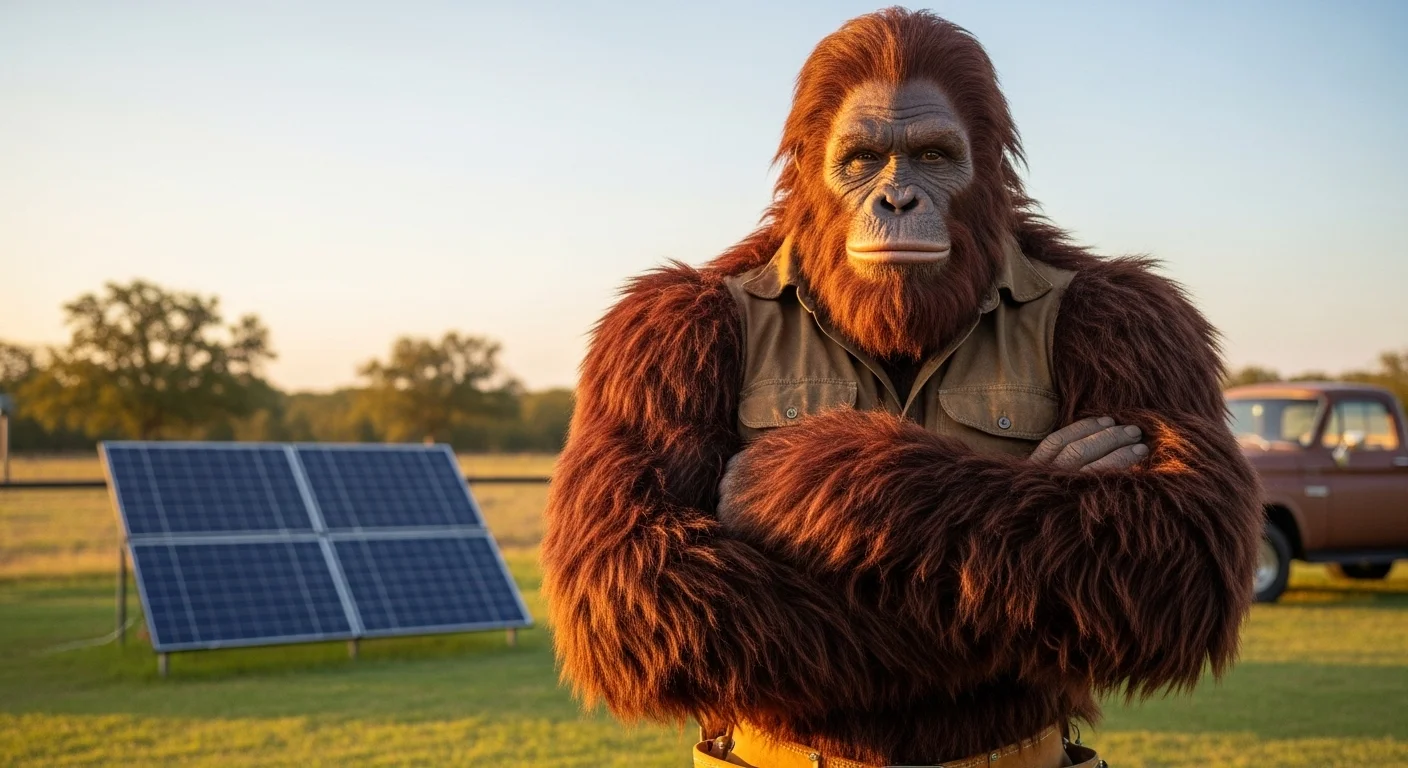
Wattson is OffGridPowerHub’s Energy Resilience Strategist. But that title didn’t come from a course. It came from a $850 monthly electric bill that kept climbing with no explanation, a contractor with twenty years of experience who built a system so undersized it blew up every time a kettle was plugged in, and batteries that literally melted after a year. Most people would have walked away. Wattson flew to Florida instead, trained at the US Solar Institute, came home, and built a 16kW 48V system himself. The utility bill disappeared. It hasn’t come back since.
“I didn’t come out of the woods because I missed people. I came out because the next outage doesn’t announce itself — and the families who built something beforehand are the ones who make it through without the panic.”
You don’t need the most expensive equipment.
You don’t need to become a solar engineer.
You need systems sized right, installed right, and maintained right — so they work when you need them.
That’s what we help you build.
Reliable Power. No Panic. No Surprises.