
Clicky

OffGrid Power Hub - Professional Blue-Gray Theme
Wattson mascot TARIFF ALERT: Solar prices rising 25-40% in 2025 - Secure American-made independence NOW
Wattson the off-grid sasquatch mascot - OffGrid Power Hub logo
Energy Independence
for American Patriots

Off Grid Solar System Size: 4-Step Method to Get It Right

The sizing mistake that costs DIY families $5,000 to $15,000. Here is how to avoid it.

Built for the budget-conscious builder who does his own math before spending a dime.

Last Updated: February 2026 | US Solar Institute Trained

Quick Answer: Off Grid Solar System Size

Most people get their off grid solar system size wrong. Either oversized (wasting $5K-$15K) or undersized (batteries die in 2-3 years instead of 10-15).

The fix: A 4-step sizing method that accounts for your actual loads, your location, your equipment, and your future plans.

Quick formula: Daily kWh divided by peak sun hours times 1.25 equals your minimum system size in kW. Our free calculator does this for you in 60 seconds.

Free Off Grid Solar System Size Calculator

Enter your numbers. Get your custom system size in 60 seconds. No guessing. No sales pitch.

Use the Free Calculator

My $15,000 Off Grid Solar System Size Mistake

Off grid solar system size is the single decision that determines whether your investment pays off or drains your bank account. I learned that lesson with a contractor and a check for $15,000 undersized system.
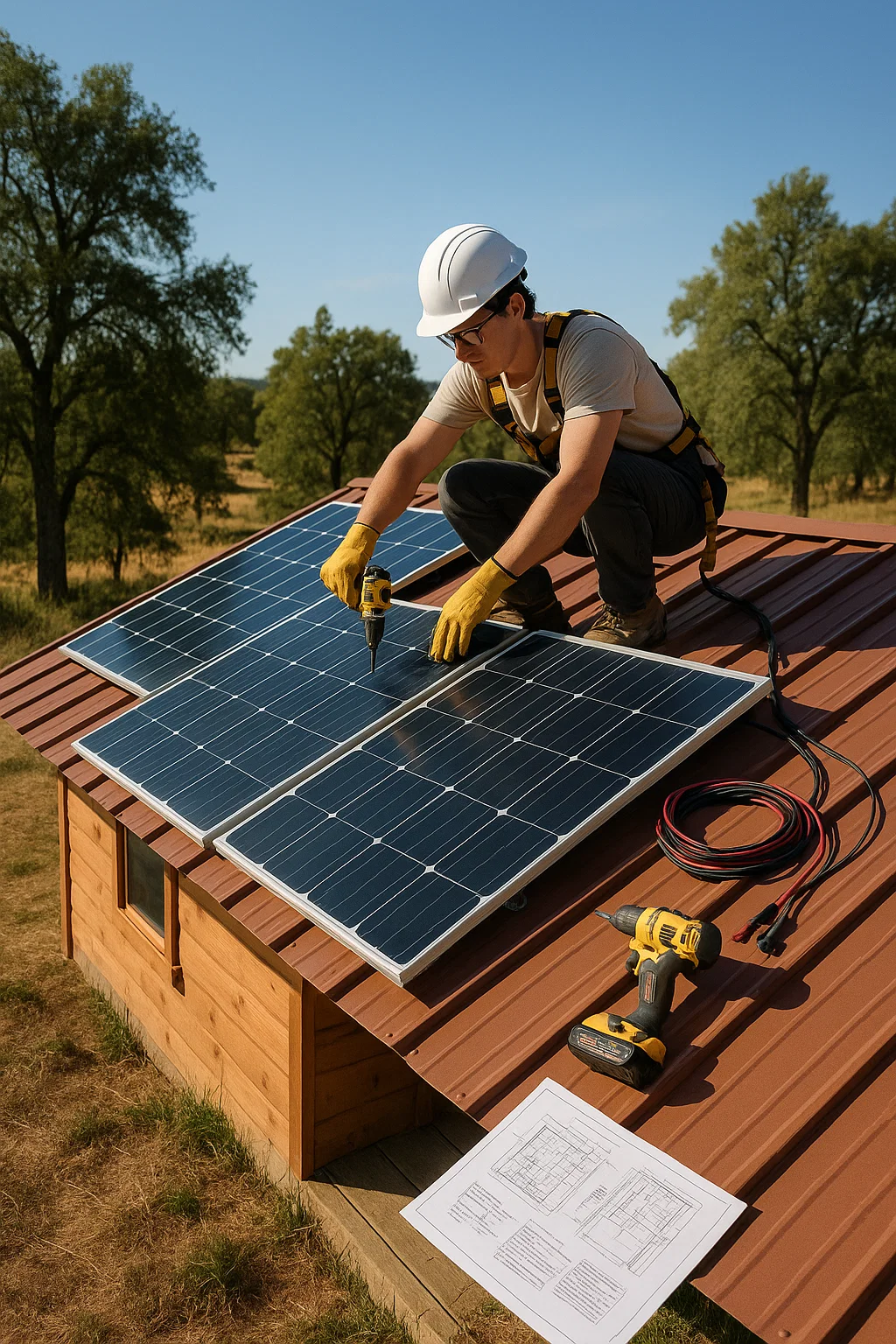
off grid solar system size installation guide

Here Is What Happened

A contractor sold me an undersized system. He promised it would handle my full household load. It could not handle half, even with 8 hours of sun beating down on the panels. I trusted his numbers because I did not have my own. That was the real mistake. He handed me a quote, I wrote the check, and the system failed everytime I plugged in my water kettle.

If I had a calculator like this one back then, I never would have walked into that trap. I would have run my own numbers first. I would have known what my actual daily load was, what my peak sun hours looked like, and what size system those numbers pointed to. His quote would have raised a red flag before I signed anything.

Whether you are a weekend warrior doing the install yourself or you are hiring an expert to handle it, this calculator keeps you from making the same $15,000 mistake I did. You do not need to be an electrician. You just need your own numbers. When the contractor hands you a quote, you will know enough to challenge it. And that one conversation could save you thousands.

Within one year the batteries started overheating. Constant overwork pushed them past their limits. Walked into the battery room just in time to see them melting. Literally metlting.

That disaster sent me to the US Solar Institute. I got trained. Learned every calculation and failure mode myself. Rebuilt my system properly and eliminated an $850 monthly electric bill. That was 2011. The system still runs strong today.

If you are spending your hard-earned money on solar, you deserve to get the off grid solar system size right from day one. Not year three, after the batteries are toast.

Have you ever looked at a contractor's quote and wondered if they added $5,000 more than you actually need?

Why Getting Your Off Grid Solar System Size Right Matters

This is not just about panels and math. The off grid solar system size you choose affects your wallet, your equipment lifespan, and your family's energy security for the next 15-25 years.

The Cost of Undersizing

An undersized system forces your batteries to work harder every single day. Instead of lasting 10-15 years, they burn out in 2-3. A $10,000 battery bank replaced twice costs you $20,000 more than doing it right the first time. According to the U.S. Department of Energy, proper load analysis is the most important step in any solar system design.

The Cost of Oversizing

Oversized systems waste $5,000 to $15,000 on equipment you will never fully use. Some installers push 40-60% more capacity than you need because their profit margin grows with your system size. Smart oversizing of 10-20% makes sense for future growth. Anything beyond that is money you could have put toward a well pump, a workshop, or your kids' college fund.

The Real Stakes: Room for Growth

Your family's needs will change. The off grid solar system size you choose today needs to handle tomorrow's electric vehicle, next year's chest freezer, and the workshop you have been planning. Adding capacity later costs 2-3 times more than building it in from the start. The wiring, inverter, and charge controller should handle your full future load from day one. Phase in panels over time if your budget is tight.

If you added an EV charger, a second freezer, and a workshop this year, would your current system handle it?

Think 10 Years Ahead

The cheapest time to size for growth is right now. Run your future numbers through our free sizing calculator before you buy a single panel. The National Renewable Energy Laboratory (NREL) confirms that properly matched components improve system efficiency by 15-25% over mismatched setups.

Skip the Guesswork

Our free calculator runs these numbers for your specific location and loads. Enter your data and get a custom system size in 60 seconds.

Use the Free Calculator

Step 1: True Load Analysis

Every correct off grid solar system size starts with one question: how much power does your household actually use each day?

Not what the contractor guesses. Not what the internet averages say. Your actual daily consumption in kilowatt-hours.

How to Measure Your Real Load

Utility Bill Method: Take your monthly kWh from your electric bill. Divide by 30. That gives you your daily average. Simple, but it misses seasonal peaks.

Appliance Audit Method: List every appliance in your home. Multiply its wattage by the hours you run it each day. Add all the results and convert to kWh. This method catches everything, including that space heater you run three months a year. Our Load Assessment Guide walks you through this step by step.

Do Not Forget Startup Surge

An air conditioner draws 3-5 times its running watts at startup. A well pump draws 2-3 times. Your inverter must handle these peak loads, not just the average. See our Inverter Buying Guide for proper sizing.

Step 2: Site Assessment

Two houses with the same daily kWh can need completely different system sizes. The difference is location.

What Your Site Tells You

Peak Sun Hours: This is the number of hours per day your panels produce at full rated power. Arizona gets 6-7 peak sun hours. Oregon gets 3-4. Same panels, half the output.

Shading and Angle: A tree shadow across two panels at noon can drop your entire string output by 30-40%. Roof angle matters. Ground mounts let you control the tilt.

Seasonal Variation: Design for your worst month, not your best. If December gives you 3 peak sun hours, that is what your system needs to handle, even if July gives you 7.

Have a question about your specific location? Our OffGridPowerHub GPT tool gives location-specific answers. Enter your ZIP code and get permit requirements, peak sun hours, and sizing guidance for your area.

Step 3: Component Matching

Getting the right system size means nothing if the components fight each other. Mismatched panels, batteries, and inverters waste energy and shorten equipment life.

What Needs to Match

Panels to Charge Controller: Your charge controller must handle the total voltage and amperage of your panel array. Overloading it causes shutdowns. Undersizing it wastes panel capacity.

Battery Bank to Daily Load: Your battery bank needs enough storage for your daily consumption plus days of backup for cloudy weather. Our Battery Storage Guide breaks this down.

Inverter to Peak Load: Size your inverter for the maximum load you will ever run at one time, including startup surges. Not the average. The peak.

We only recommend products we personally use. If you are shopping for panels or batteries, check our tested picks for solar panels and solar batteries on Amazon.

Disclosure: Some links on this page are affiliate links. We earn a small commission at no extra cost to you. We only recommend products we personally use on our own off-grid property.

Step 4: Plan for Growth

This is where most DIY families save or lose thousands. The system size you choose today must account for what your family will need 5, 10, even 15 years from now.

What to Plan For

Electric Vehicles: A single EV charger adds 30-40 kWh per day to your load. That could double your current system requirements.

Workshop and Tools: A table saw, welder, or air compressor can spike your peak load by 3,000-5,000 watts. Your inverter and wiring need to handle it.

Well Pump: If you plan to drill a well, factor in 1,000-2,000 watts running plus 3-4 times that for startup surge.

Family Changes: Kids grow up. They bring devices, space heaters, gaming systems. An aging parent moves in. Your load will grow whether you plan for it or not.

Build the Infrastructure Now. Add Panels Later.

This is the smartest budget move you can make. Install wiring, charge controller, and inverter sized for your full future load. Then add panels in phases as your budget allows. The infrastructure is the expensive part to redo. Panels are easy to add.

Wattson's Wisdom: The Math That Matters

Undersizing kills batteries. They overwork daily. Die in 2-3 years instead of 10-15. You will replace a $10,000 battery bank twice before a properly-sized system needs its first swap.

Oversizing kills budgets. That extra $10,000 in panels earns zero return. Could have gone toward your well pump, your workshop, or your family's emergency fund.

Get it right once. Use our free off grid solar system size calculator and stop guessing with your family's energy independence.

Quick Reference: Off Grid Solar System Size Formula

Our calculator does this automatically. But if you want to run the numbers by hand, here is the formula.

Basic System Size

Daily kWh ÷ Peak Sun Hours × 1.25 = System kW

Example: 30 kWh/day ÷ 5 hours × 1.25 = 7.5 kW minimum

The 1.25 multiplier accounts for system losses from wiring, heat, inverter conversion, and panel degradation. For a deeper dive into load calculations, see our Load Assessment Guide.

Frequently Asked Questions

How do I calculate the right off grid solar system size?
Calculate your daily kWh from utility bills or an appliance audit. Divide by peak sun hours for your location. Add 25% for system losses. Example: 30 kWh divided by 5 hours times 1.25 equals a 7.5 kW minimum system.
What happens if I undersize my off grid solar system?
Batteries constantly overwork. Their lifespan drops from 10-15 years to 2-3 years. Frequent power outages during peak demand. Complete battery bank replacement will cost more than proper sizing would have upfront.
What happens if I oversize my solar system?
You waste $5,000 to $15,000 on equipment you will never fully use. Some oversizing of 10-20% is smart for future expansion. But 40-60% oversizing is pure waste that installers profit from at your expense.
How many solar panels do I need for a 2,000 square foot house?
Square footage alone does not determine system size. What matters is your actual energy consumption. A 2,000 sq ft house could need 15-25 panels for average use, or 30-40 for heavy use with electric heat, a pool, or EV charging. Always calculate based on kWh, not home size.
Should I size my solar system for current or future needs?
Always size for future maximum needs. Adding capacity later costs 2-3 times more. Plan for EVs, workshop tools, well pumps, and family growth. Build your infrastructure for your end goal and phase in panels over time if budget is tight.

Ready to Find Your Off Grid Solar System Size?

Enter your numbers. Get your custom system size in 60 seconds. No guessing. No overselling. Just the right answer for your family.

Use the Free Calculator