
Energy Independence
for American Patriots
for American Patriots
TARIFF ALERT: Solar prices rising 25-40% in 2025 - Secure American-made independence NOW
Control your water. Control your future. Collecting rainwater means nothing if you can't store it safely. The right containers—properly selected and maintained—turn seasonal rainfall into year-round water security. The wrong ones turn your investment into a stagnant, algae-choked liability.
Water storage is just one piece of true preparedness. Get our complete guide covering water, food, power, and security essentials.
Download Free Guide✅ The preparedness checklist families won't go without
TL;DR: Rain barrels (55 gallons) are great starters but fill fast. IBC totes (275-330 gallons) offer massive capacity upgrade at low cost—but require light-blocking and previous-contents verification. Dedicated tanks (500-10,000+ gallons) handle serious storage needs with materials for every situation.
Key insight: ALL containers must be food-grade if water might ever be consumed. Block ALL light to prevent algae. Keep ALL openings sealed and screened against insects.
Bottom line: Start with what you can afford and expand over time. A 55-gallon barrel today beats a 5,000-gallon tank "someday." Water security is built incrementally.
You've seen the light. Maybe you've rigged up a downspout and captured some free sky-juice with a rain barrel. Good start. But collecting water is only half the battle.
Where are you going to PUT it all? Shoving dusty gallon jugs in the closet won't cut it when taps run dry for a week. Not when you need serious volume for your garden, livestock, or basic sanitation without draining precious drinking supplies.
Storing water isn't just about having ENOUGH—it's about storing it SAFELY and EFFECTIVELY. Let your hard-won H2O turn into a stagnant, algae-choked, mosquito-breeding swamp, and you've created something worse than useless. You've created a hazard.
You need the right containers. The right setup. The right knowledge to keep that liquid lifeline clean and ready. Forget flimsy solutions. We're building a real water reserve—a fortress against thirst and dependency.
Municipal systems fail. Boil orders, contamination, infrastructure failures, natural disasters. When they happen, "just turn on the tap" stops working.
Wells run dry. Droughts affect groundwater. Pumps fail. Power outages kill electric well pumps. Having stored water means backup when your primary source fails.
Rainwater is seasonal. It pours in spring, disappears in summer. Storage bridges the gaps between wet and dry seasons.
Volume creates options. Garden irrigation, livestock watering, laundry, sanitation—all require water that shouldn't come from your drinking supply. Stored non-potable water handles these needs without touching your clean water reserves.
"August 2019. Heat wave. Well pump capacitor blew on a Saturday. No parts available until Monday. Family of four with zero stored water. We burned through every bottle, jug, and container in 36 hours. Drove 45 minutes to fill jugs at a friend's house. Installed my first IBC tote the following week. Now I keep 1,000 gallons minimum at all times. That $150 tote has paid for itself in peace of mind a hundred times over."
The 55-gallon drum is where most sensible people start. Manageable size, affordable price, simple installation. Hook it to a downspout and start capturing free water immediately.
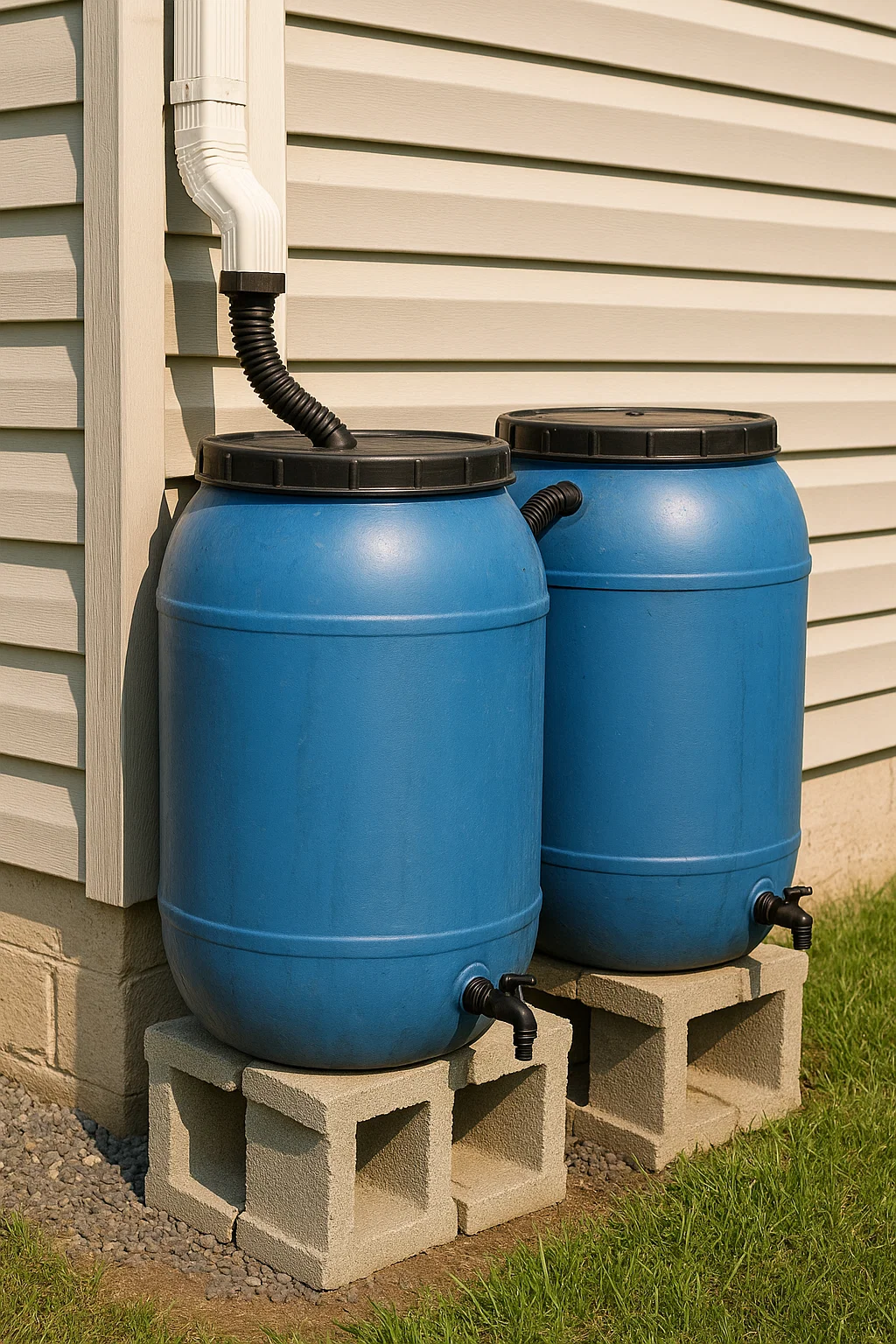
✅ The Good: Accessible entry point. Affordable ($50-150). Simple setup requires no special skills. Perfect for supplementing garden irrigation. Can daisy-chain multiple barrels.
❌ The Limitations: Limited capacity fills FAST in heavy rain. Needs elevation for decent gravity pressure. Multiple barrels get complicated to link effectively. Not practical for whole-house backup.
⚠️ CRITICAL: MUST be food-grade plastic (HDPE #2, often blue or white/opaque) if you ever intend to treat this water for drinking. Keep lid TIGHT and screened—bugs and sunlight are the enemy.
Recommended: Food-grade 55-gallon rain barrels designed specifically for rainwater collection with screens and spigots included.
Ready for more volume without building a swimming pool? The IBC Tote (Intermediate Bulk Container) delivers. Those square, caged plastic tanks you see around farms and industrial sites hold 5-6x more than rain barrels at surprisingly reasonable cost—especially used.
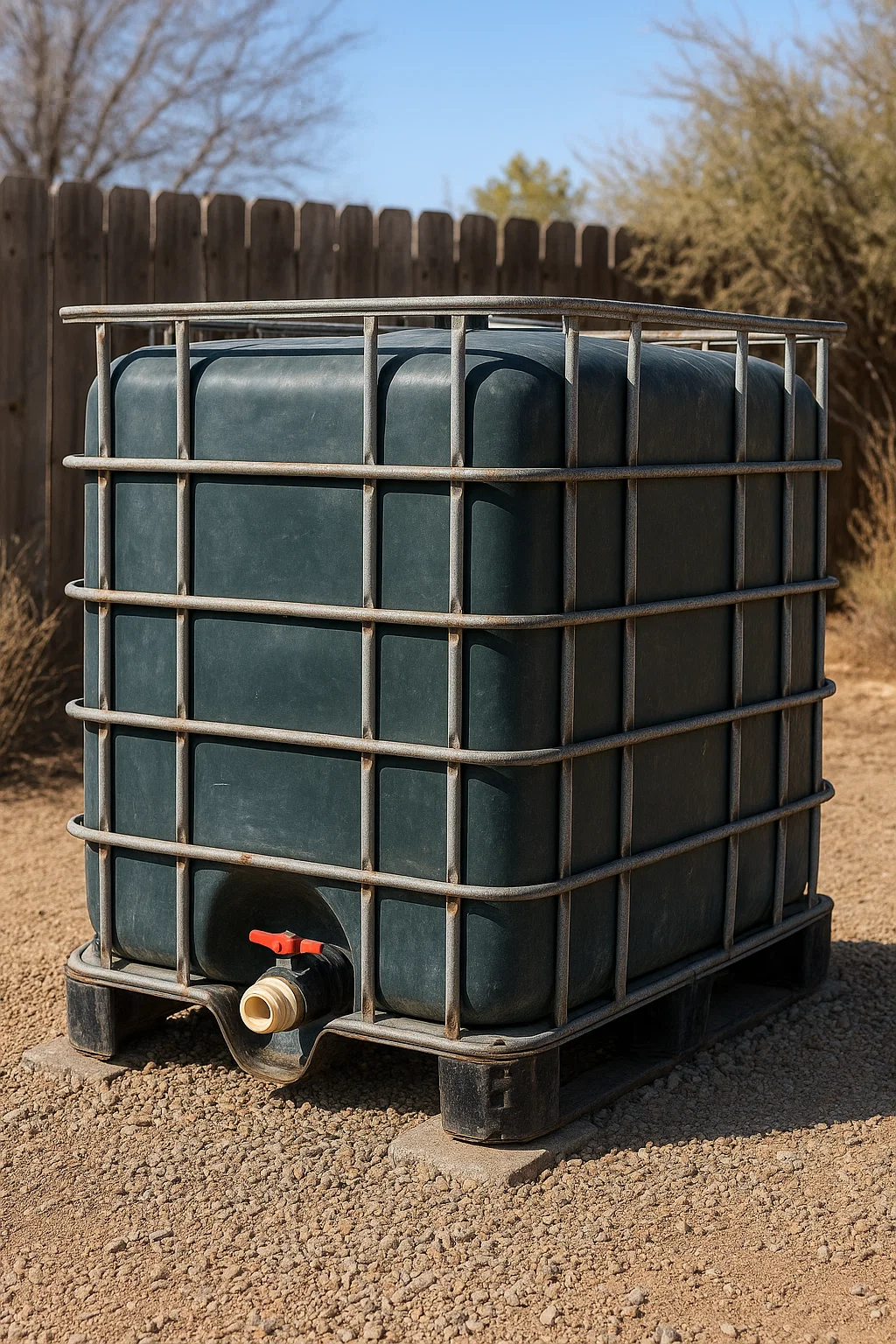
✅ The Good: Massive capacity for the footprint. Surprisingly affordable (especially used). Built-in valve/spigot. Metal cage protects plastic. Stackable (carefully!). Standard pallet base for easy moving.
❌ The Limitations: Bulky and heavy even empty. MUST know previous contents—NEVER use if it held toxic chemicals. Translucent plastic requires light-blocking (paint, cover, or enclosure). Needs solid, level base.
⚠️ CRITICAL: FOOD-GRADE ONLY if intended for potable water. Thoroughly clean ANY used tote. Block ALL sunlight—paint the outside black then white, or build an enclosure. Algae grows in days if light penetrates.
Method 1: Paint exterior with dark exterior latex paint (black base, then white topcoat to reduce heat absorption).
Method 2: Build a simple wooden enclosure or lean-to around the tote.
Method 3: Use purpose-made IBC covers (available at farm supply stores).
Running a solar-powered well pump? Calculate your complete power needs including pumping, filtration, and pressure systems.
Calculate My Power Needs✅ Size your system to run pumps and filters
When you're talking thousands of gallons, serious long-term storage, or a complete cistern system, dedicated water tanks are the answer. Multiple materials, shapes, and installation options exist for every situation.
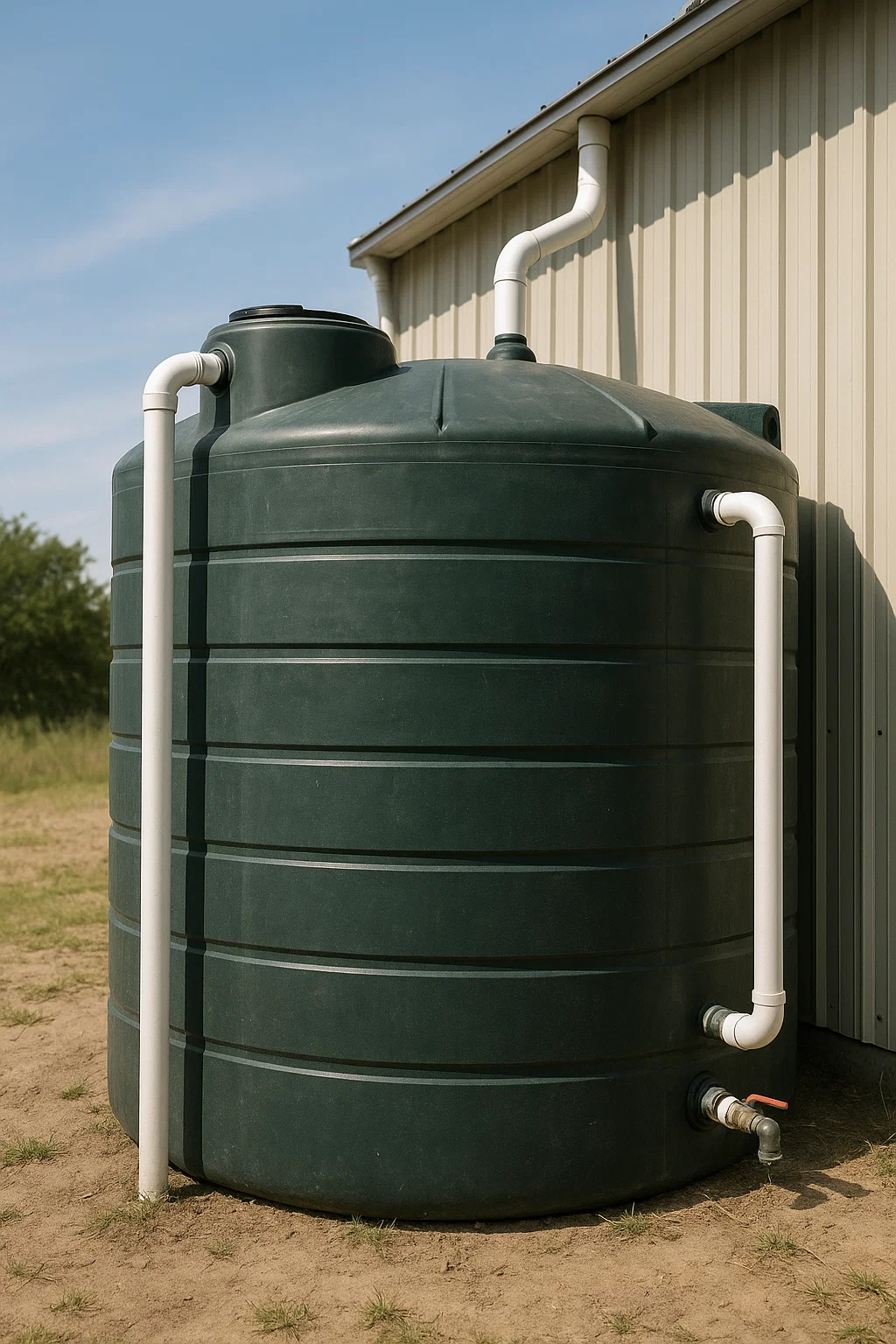
Most common for above-ground use. Black or dark green to block sunlight. Lightweight, durable, often NSF-rated for potable water. Available in vertical, horizontal, and low-profile styles.
Strong, durable, excellent for underground installation. More expensive than poly but superior for buried cisterns. Won't crack under ground pressure.
Old-school durability. Common for agricultural or fire suppression. May require interior lining for potable water use. Can affect taste if unlined.
Built on-site or buried. Extremely durable, keeps water cool, naturally neutralizes slightly acidic rainwater. Major construction project requiring professional installation. See our Cisterns: Underground Water Bunker guide.
✅ The Good: Massive storage potential. Designed for longevity. Specific options for potable water and burial. Professional support available for installation.
❌ The Limitations: Significant cost ($500-$5,000+). Requires proper site preparation. Delivery and placement challenging for large tanks. Plumbing more complex.
⚠️ CRITICAL: Any tank for drinking water MUST be rated for potable use (NSF/ANSI 61 certified). Plan plumbing, overflow, and access points BEFORE installation. Verify local codes for buried tanks.
| Type | Capacity | Cost | Best For | Longevity |
|---|---|---|---|---|
| Rain Barrel | 55 gal | $50-150 | Garden, small backup | 10-15 years |
| IBC Tote | 275-330 gal | $75-300 | Mid-volume storage | 15-20 years |
| Poly Tank | 500-5000 gal | $300-2000 | Above-ground storage | 20-30 years |
| Fiberglass | 500-10000 gal | $1000-5000 | Underground cistern | 30-50 years |
| Concrete | 1000-50000 gal | $3000-20000 | Permanent cistern | 50+ years |
"Bought a used IBC tote, rinsed it twice, felt proud of my water storage upgrade. Three weeks later: green slime coating the inside. Forgot to paint it. That translucent plastic let enough light through to turn my 'clean' water into a science experiment. Drained it, scrubbed it with bleach solution, painted it black, then white. Never had the problem again. Block. The. Light."
Water expands when it freezes. This simple fact destroys barrels, tanks, and plumbing every winter. Plan accordingly.
Tanks buried below the frost line (4-6 feet in most northern areas) won't freeze. Concrete cisterns excel here. Fiberglass tanks handle burial well. Poly tanks need proper backfill to prevent deformation.
Pipes freeze before tanks. Insulate all exposed plumbing. Use heat tape on vulnerable runs. Install drain valves at low points for winterization.
Having a big tank of water means nothing if it turns into a science experiment. Follow these rules:
Algae needs sunlight to grow. Use opaque tanks (black, dark green) or cover/paint translucent ones. No light = no green slime.
Lids must be tight. Screen all vents and overflows. Mosquitoes turn clean water into disease vectors faster than you can say "West Nile." Keep critters, leaves, and dirt OUT.
Begin with clean containers. Filter water BEFORE it enters storage (first flush diverters, basic screens). Build a complete water purification arsenal for treating water before and after storage.
For drinking water storage, add 1/8 teaspoon unscented household bleach per gallon. This prevents bacterial growth without affecting taste significantly. Rotate treated drinking water every 6-12 months.
"People ask me what single prep makes the biggest difference. It's not guns, gold, or garden seeds. It's water storage. You can survive weeks without food, days without shelter in good weather. But 3 days without water and you're in serious trouble. Every gallon you store is insurance you hope you never need—and you'll thank yourself when you do. Start today. Start small if you have to. But start."

Continue building your water security:
Water storage is critical—but it's just one piece of true preparedness. Get our complete checklist covering water, food, power, security, and communication essentials.
Get Free Preparedness Checklist✅ Don't wait until you need it to prepare
Water storage is the bedrock of water security. Control your resources. Choose the right containers. Keep them clean, sealed, and maintained.
Having stored water when municipal systems fail isn't just convenient—it's a statement of self-reliance. Start building your water fortress today.
Explore Complete Water Guide