
Energy Independence
for American Patriots
for American Patriots
TARIFF ALERT: Solar prices rising 25-40% in 2025 - Secure American-made independence NOW
Real performance data. Real cost math. The battery truth contractors skip.
Built for the DIY builder choosing batteries for a system that cannot fail when your family needs it most.
Last Updated: February 2026 | US Solar Institute Trained | 13+ Years Off-Grid
TL;DR: Lithium vs lead acid — LiFePO4 lithium wins for most off-grid DIY builders because it delivers more usable power, lasts longer, and eliminates the maintenance that silently kills lead-acid banks. Key insight: lead acid often looks cheaper until you count replacements, time, and lost reliability. Bottom line: if your system “cannot fail,” lithium is usually the safer long-term bet.
Winner: LiFePO4 lithium wins 7 of 8 categories for most DIY builders who need reliability under stress. Lead acid wins only on upfront cost.
Lifespan: Lithium is commonly rated around 10–15 years. Lead acid often lands around 3–7 years depending on maintenance and climate.
Usable capacity: Lithium is typically used deeper. Lead acid is commonly kept around 50% to avoid early death.
10-year cost: Lithium often costs less when you factor in replacements, maintenance time, and “failure events” during outages.
DIY BUILDER This is for the DIYer who needs the system to work for the next 10–15 years, not just look good on install day.
REAL LIFE This is for the builder whose life is busy—work, kids, storms—and you don’t want a battery bank that dies because you missed a “maintenance month.”
STORM / CABIN This is for the cabin owner or storm-belt homeowner who can’t gamble on a bank that sags right when the fridge compressor kicks on.
WHAT YOU WANT You’re not shopping for chemistry. You’re shopping for control: steady power, fewer surprises, and one less failure point when the grid is down.
WHAT’S NEXT These 8 tests show which battery matches real conditions—heat, cold, imperfect maintenance, and outages that make families nervous.
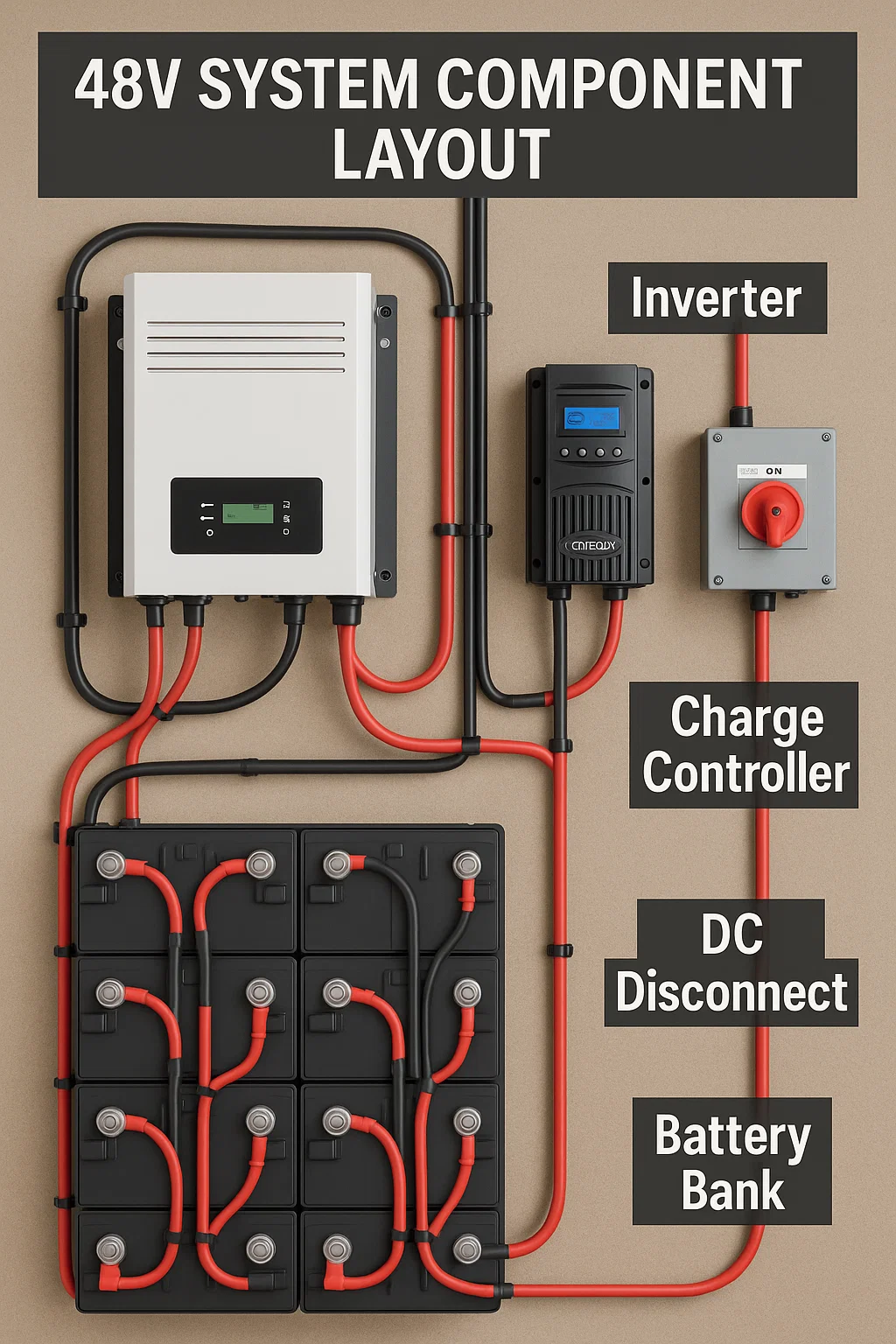
If you’re building a system that cannot fail, this is the comparison that matters—because your family doesn’t care what battery you bought. They care whether the system works when everything else doesn’t.
| Category | LiFePO4 Lithium | Lead Acid (AGM) | Winner |
|---|---|---|---|
| Usable Capacity | 80 to 90% | 50% | Lithium |
| Weight per kWh (typical) | ~30 to 40 lbs | ~70 to 100 lbs | Lithium |
| Lifespan (common ranges) | 10 to 15 years | 3 to 7 years | Lithium |
| Cycle Life (typical class) | 4,000+ cycles | 500 to 1,500 | Lithium |
| Charge Speed (system dependent) | Fast (hours) | Slow (many hours) | Lithium |
| Maintenance | None required | Monthly checks | Lithium |
| Safety Handling | No acid; typically no gassing | Acid + potential gassing | Lithium |
| Upfront Cost (typical) | $800 to $1,200/kWh | $200 to $400/kWh | Lead Acid |
The U.S. Department of Energy reports lithium battery pack costs have fallen dramatically since 2008—one reason lithium has moved from “premium” to “practical” for home builders.
Lithium wins 7 of 8 tests. Lead acid wins only on upfront price—and that’s where a lot of families get trapped.
If lead acid needs replacing every 4–6 years in real life, is the “cheaper” battery actually cheaper?
Upfront price is the bait. Total cost is the bill. If you’re protecting your home, you want the whole story—not the sales pitch.
| Cost Factor | LiFePO4 (20kWh usable) | Lead Acid (20kWh usable) |
|---|---|---|
| Initial Purchase (example scenario) | $4,500 | $2,400 (often needs larger rated bank) |
| Replacements (10 years, common outcome) | $0 (often) | $2,400 (often) |
| Maintenance Supplies | $0 | $300 (distilled water, tools, misc.) |
| Maintenance Time Value (example) | $0 | $1,200 (120 hrs at $10/hr) |
| 10-Year Total (example) | $4,500 | $6,300 |
Bottom line: in many real builds, lead acid costs more over 10 years once you price in replacement cycles and time. And time matters—because it’s usually stolen from your family, your weekends, and your peace of mind.
Builders who start with lead acid often switch to lithium. Builders who start with lithium rarely go back—because once you taste maintenance-free reliability, it’s hard to choose stress again.
Our Top 5 Lithium Batteries guide breaks the best options by budget and build style.

Lead acid looks like a deal… until it sends you the invoice in maintenance, sag, and early death.
The day the storm hits is not the day you want to discover your “budget bank” can’t start a fridge.
If you can afford it, buy the battery that stays calm under pressure. That’s the whole game.
Affiliate note: the Battle Born LiFePO4 link may earn us a small commission at no extra cost to you.
If your battery bank is undersized, you’ll feel it at the worst possible time. Size it correctly the first time—no guesswork.
Calculate Your System SizeBuilt for DIY builders who are tired of expensive mistakes.
If you’re doing this yourself, your build succeeds or fails on practical friction. Weight. Venting. Maintenance. Mistakes you only make once—if you’re lucky.
Weight: Lithium is typically far lighter per usable kWh, which matters when you’re hauling gear into a cabin, a shed, or a tight utility space.
BMS protection: Many LiFePO4 batteries include a built-in BMS that helps prevent common battery-killing mistakes.
No acid handling: No sloshing acid. No “oops” moment that becomes a safety problem.
Simpler monitoring: A Victron BMV-712 monitor can keep you honest about state of charge and usage patterns.
Tight budget: If upfront cost is your only constraint and you need power now, lead acid can get you started.
Short-term plan: If this is a temporary system you expect to upgrade, lead acid may be an acceptable stepping stone.
Hands-on maintenance: If you’re disciplined with routine checks and your climate is mild, lead acid can behave well—until life gets busy.
For complete wiring guidance, see our Battery Wiring Guide.
Be honest: when life gets chaotic, do you want a battery that needs you… or one that just works?
Your battery doesn’t live in a spreadsheet. It lives in heat, cold, humidity, and real weather. The National Renewable Energy Laboratory (NREL) has published research on battery performance across temperature ranges—because temperature is one of the fastest ways to turn “rated life” into disappointment.
Reality: Many lithium systems require charging protection below freezing (some use internal heaters or charging limits). That’s not a deal-breaker—just a design detail.
Lead acid pain point: Lead acid capacity can drop noticeably in cold, which is how winter turns a “big battery bank” into a half-empty promise.
Lithium advantage: Many lithium packs include thermal protections, and real-world users report consistent performance when installed correctly.
Lead acid downside: Heat accelerates degradation. If you live where summers feel like an oven, lead acid often ages faster than you want.
For seasonal adjustments, see our Seasonal Maintenance Guide.
Safety is not a buzzword when you’re building power where your family sleeps. It’s a decision with consequences.
LiFePO4 avoids acid handling and is often described as one of the safer lithium chemistries. Many packs include a BMS to help prevent common failures.
Still true: any battery can be dangerous if installed incorrectly. Follow manufacturer guidance, fuse correctly, and treat wiring like it can bite.
Lead acid involves sulfuric acid handling and can produce gases during charging (ventilation matters). Maintenance means more routine exposure to hazards.
Proper disposal is required because lead is an environmental and health concern.
For safe installation practices, see our DIY Installation Guide.
On paper, everything lasts forever. In your shed? Heat, cold, corrosion, and chaos write the real story.
Choose the battery that keeps showing up when life gets messy.
This is where “cheap” batteries get expensive—because maintenance is not just time. It’s attention. And attention is a resource you don’t have during emergencies.
Typically none. Check connections periodically if you’re thorough.
Common tasks include checking water levels (flooded), cleaning corrosion, verifying performance, and managing charging practices.
Miss enough maintenance and the bank loses capacity early—right when you need it most.
Lead acid feels manageable… until life gets busy. Then the routine slips. Then capacity drops. Then you’re buying batteries again sooner than planned.
Lithium removes that entire failure mode. Install it. Use it. Focus on the rest of your preparedness plan.
Our Battery Maintenance Checklist covers what lead acid owners must track.
Get the Solar Buyer Checklist—battery sizing, brand comparisons, installation pitfalls, and the “don’t do this” mistakes that ruin systems.
Get the Free ChecklistIf you’re building a system that must protect your home during outages, the “winner” is the battery that stays reliable when your schedule is full and the weather is ugly.
You want zero routine maintenance. You value reliability. You’re building long-term. You don’t want a battery bank that punishes you for being human.
Upfront budget is your only constraint and you accept the trade: more maintenance, more replacement risk, more performance drop in harsh conditions.
BUDGET PRESSURE This is for the homeowner who wants to stretch the budget—but refuses to build a system that turns into regret.
DISTANCE This is for the rural builder where a “quick run to the store” is an hour, and replacing batteries early is not a small inconvenience.
MAINTENANCE REALITY This is for the person who knows deep down that “monthly maintenance” sounds easy… until life gets chaotic.
SOLUTION YOU SEEK You want the battery choice that stays reliable even when your schedule isn’t perfect—because outages don’t care how busy you are.
BOTTOM LINE If your system cannot fail, lithium is usually the safer long-term choice. If budget is truly the wall, lead acid can work—if you treat maintenance like it’s part of the build.
Practical verdict: Pay more upfront for lithium if you can. It usually buys you years of stability, fewer surprises, and one less thing that can fail under pressure.
Start with our Component Selection Guide for complete system planning.
Need location-specific battery advice? Our OffGridPowerHub GPT gives personalized guidance by ZIP code.
If you’re choosing between lithium vs lead acid and you don’t want to guess, use our OffGridPowerHub GPT. It helps you pick a battery approach based on climate, loads, and your real-world setup.
Get Personal GuidanceBuilt for builders who want answers before they spend the money.
How much storage you actually need for your loads.
Best LiFePO4 options by budget and build type.
If you’re staying lead acid, here’s how to choose smarter.
Some links are affiliate links. We earn a small commission at no extra cost to you.
For many DIY builders, lithium costs more upfront but costs less over 10 years because replacements and maintenance drop hard.
If your system “cannot fail,” that reliability often matters more than the sticker price.
LiFePO4 is commonly rated around 10 to 15 years with thousands of cycles.
Lead acid is commonly 3 to 7 years depending on depth of discharge, heat, and maintenance.
Most manufacturers recommend using about 80 to 90% depth of discharge for longevity.
Lead acid is typically kept closer to 50% if you want it to last.
Lithium is usually easier: lighter weight, less routine maintenance, and built-in protections in many models.
Lead acid demands discipline—especially when life gets busy.
LiFePO4 is widely considered a safer lithium chemistry when installed properly.
It also avoids acid handling and common lead-acid gassing concerns.
If you’re choosing batteries for an off-grid system that protects your family during outages, here’s the clean takeaway:
Bottom line: If your system cannot fail, lithium is usually the safer long-term choice.
Size your system correctly the first time. Our calculator does the math so you don’t gamble with your family’s comfort.
Get Your Free Solar Calculator