 TARIFF ALERT: Solar prices rising 25-40% in 2025 - Secure American-made independence NOW
for American Patriots
Home Battery Backup: 5 Critical Sizing Mistakes to Avoid
Keep your home powered when the grid fails. This home battery backup guide covers sizing, costs, runtime calculations, and the mistakes that leave homeowners in the dark.
For Homeowners Who Refuse to Sit in the Dark During Outages

Home battery backup quick facts:
- Cost: $10,000-$30,000 for complete system
- Essential circuits: 5-10kWh battery ($5,000-$10,000)
- Whole house: 20-40kWh battery ($15,000-$30,000)
- Runtime: 24-48 hours for essentials, 4-8 hours for whole house
- Best battery: LiFePO4 for 10-15 year lifespan
Home battery backup beats generators for convenience, silence, and zero fuel costs. Add solar panels for recharging during extended outages.
The ice storm knocked out power for three days. Your neighbor fired up his generator at 6 AM. The noise. The fumes. The constant gas runs. Meanwhile, your home battery backup switched over silently. No noise. No fuel. Just lights, heat, and a working refrigerator while the neighborhood struggled.
Free Battery Sizing Calculator
Calculate exactly what home battery backup size you need. Avoid expensive mistakes.
Get Free CalculatorWhat Is Home Battery Backup?
Home battery backup stores electricity for use during grid outages. The system charges from solar panels, grid power, or both. When the grid fails, your home switches to battery power automatically.
Unlike generators, backup batteries operate silently. No fuel. No exhaust. No maintenance. Just reliable power when you need it most.
According to the U.S. Department of Energy, battery storage systems qualify for the federal solar tax credit when installed with solar panels, reducing your costs by 30%.
Key Components
Battery bank: Stores electricity for later use. LiFePO4 batteries last 10-15 years.
Inverter/charger: Converts DC battery power to AC household power. Also manages charging.
Transfer switch: Automatically disconnects from grid and switches to battery power during outages.
Solar panels (optional): Recharge batteries during daylight. Essential for extended outages.
5 Critical Home Battery Backup Sizing Mistakes
These mistakes cost homeowners thousands and leave them without power when they need it most.
Mistake #1: Underestimating Daily Usage
Most homeowners guess their power consumption. Guessing leads to undersized systems. An undersized home battery backup runs out mid-outage.
Solution: Track actual usage with a power monitor for one month. Or calculate by adding up appliance wattages and run times.
Mistake #2: Ignoring Surge Requirements
Refrigerators, AC units, and pumps draw 3-7x their rated wattage when starting. A system that handles running loads may fail on startup surges.
Solution: Size your inverter for surge capacity, not just continuous load. Add 50% buffer minimum.
Mistake #3: Forgetting About Winter
Battery capacity drops in cold temperatures. A 10kWh battery may deliver only 7-8kWh when temperatures drop below freezing.
Solution: Install batteries in temperature-controlled space or size 20-30% larger for cold climates.
Mistake #4: Sizing for Average Instead of Peak
Average daily usage ignores peak demand days. The hottest summer day or coldest winter night requires more power than average.
Solution: Size for worst-case scenarios, not comfortable averages.
Mistake #5: Skipping the Load Assessment
Trying to power everything costs 2-3x more than powering essentials. Most outages last under 24 hours. You do not need to run everything.
Solution: Prioritize critical loads. Refrigerator, lights, communication, and medical equipment. Add comfort loads only if budget allows.
WATTSON'S BACKUP TRUTH: "Size for reality, not fantasy."
Watched a neighbor spend $25,000 on whole house backup. First outage, his AC ran the batteries dead in four hours. He could have powered essentials for three days at half the cost. Understand your actual needs before you spend.
Home Battery Backup Sizing Guide
The right system size depends on what you want to power and for how long.
Essential Circuits Only (5-10kWh)
Most affordable option. Powers only critical loads:
- Refrigerator (1.5-2 kWh/day)
- LED lighting (0.5-1 kWh/day)
- Phone and laptop charging (0.3-0.5 kWh/day)
- Internet router and modem (0.2-0.3 kWh/day)
- Medical equipment if needed
Daily usage: 3-5 kWh
Recommended battery: 5-10 kWh for 1-2 days backup
Cost: $10,000-$15,000 installed
Most Appliances Except AC (10-15kWh)
Mid-range option. Powers most household needs:
- Everything above plus:
- Microwave (1-2 kWh/day)
- Television (0.5-1 kWh/day)
- Washing machine (1-2 kWh per load)
- Well pump (2-4 kWh/day)
Daily usage: 8-15 kWh
Recommended battery: 10-15 kWh for 1 day backup
Cost: $15,000-$22,000 installed
Whole House Including AC (20-40kWh+)
Premium option. Powers everything including air conditioning:
- Everything above plus:
- Central air conditioning (10-20 kWh/day)
- Electric water heater (3-5 kWh/day)
- Electric range/oven (2-5 kWh/day)
Daily usage: 25-50 kWh
Recommended battery: 20-40 kWh or more
Cost: $25,000-$40,000+ installed
Runtime Calculations
Runtime depends on battery capacity and power consumption. Here is how to calculate runtime for your situation.
| Battery Size | Essential Circuits | Most Appliances | Whole House |
|---|---|---|---|
| 5 kWh | 12-24 hours | 4-8 hours | 2-4 hours |
| 10 kWh | 24-48 hours | 8-16 hours | 4-8 hours |
| 20 kWh | 2-4 days | 16-32 hours | 8-16 hours |
| 40 kWh | 4-8 days | 2-4 days | 16-32 hours |
Runtime formula: Battery kWh × 0.85 (efficiency) ÷ Average hourly load = Hours of backup
Adding solar panels extends runtime indefinitely during daylight hours. A properly sized solar array recharges batteries faster than you consume power.
Three days without power. Your generator neighbor made six gas station trips. Waited in line each time. Spent $200 on fuel. Your backup system recharged itself every day from the panels on your roof. Zero trips. Zero fuel cost. Zero stress. The math works when you calculate real-world scenarios.
Home Battery Backup Cost Breakdown
Understanding the complete cost helps you budget accurately and avoid surprises.
| Component | Essential Only | Most Appliances | Whole House |
|---|---|---|---|
| Battery Bank | $5,000-$8,000 | $8,000-$12,000 | $15,000-$30,000 |
| Inverter/Charger | $2,000-$3,000 | $3,000-$5,000 | $5,000-$8,000 |
| Transfer Switch | $500-$1,000 | $1,000-$2,000 | $2,000-$3,000 |
| Installation | $2,000-$4,000 | $3,000-$5,000 | $5,000-$8,000 |
| TOTAL | $10,000-$16,000 | $15,000-$24,000 | $27,000-$49,000 |
Federal tax credit: 30% of total cost when installed with solar panels. A $20,000 system qualifies for $6,000 tax credit, reducing net cost to $14,000.
Free Battery Sizing Calculator
Get exact sizing and cost estimates for your home. Avoid expensive mistakes.
Get Free CalculatorHome Battery Backup vs Generator
This comparison helps you decide between battery and generator systems.
Battery Backup
- Silent operation
- Automatic switching (milliseconds)
- Zero fuel costs
- Indoor installation
- Zero maintenance
- No exhaust fumes
- Recharges from solar
- 10-15 year lifespan
- Higher upfront cost
Standby Generator
- Noisy (60-80 dB)
- 10-30 second startup delay
- Ongoing fuel costs
- Outdoor installation only
- Regular maintenance required
- Produces carbon monoxide
- Requires fuel storage
- 15-25 year lifespan
- Lower upfront cost
The National Renewable Energy Laboratory reports that battery storage systems require minimal maintenance compared to generators, reducing lifetime ownership costs significantly.
When to Choose Battery Backup
- Frequent short outages (1-8 hours)
- Noise restrictions in your neighborhood
- No space for outdoor generator
- Already have or plan solar panels
- Want automatic, hands-off operation
- Value zero maintenance
When to Choose Generator
- Extended outages (days to weeks)
- Maximum whole-house power needed
- Tight budget
- Natural gas available (no fuel storage)
- Very high power loads (central AC, electric heat)
WATTSON'S COMPARISON TRUTH: "Both have their place."
I have both. Battery handles 95% of outages automatically. The generator sits ready for extended emergencies. Most homeowners only need one. If outages in your area last under 24 hours, batteries win every time. If you regularly lose power for days, consider a generator as secondary backup.
Best Battery Types for Home Backup
Battery chemistry significantly impacts performance and lifespan.
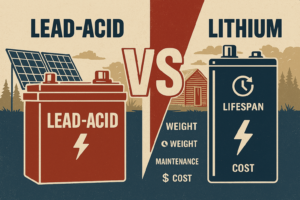
| Battery Type | Lifespan | Usable Capacity | Maintenance |
|---|---|---|---|
| LiFePO4 | 10-15 years | 80-90% | Zero |
| Lithium NMC | 8-12 years | 80-90% | Zero |
| Lead-Acid AGM | 3-5 years | 50% | Low |
| Lead-Acid Flooded | 3-7 years | 50% | Monthly |
Best choice: LiFePO4 (lithium iron phosphate) batteries offer the best combination of lifespan, safety, and performance. Higher upfront cost delivers lowest lifetime cost.
For detailed battery comparisons, see our Lithium vs Lead-Acid Guide.
Is Home Battery Backup Worth the Investment?
Value depends on your specific situation. Here is when it makes financial sense.
High Value Scenarios
- Frequent outages: 10+ hours of outages per year
- Medical equipment: CPAP, oxygen, insulin storage
- Work from home: Lost income during outages
- Extreme climate: Heating/cooling critical to safety
- Time-of-use rates: Charge cheap, use during peak pricing
- High electricity costs: Over 20 cents/kWh
Lower Value Scenarios
- Rare outages (under 2 hours per year)
- Low electricity rates (under 10 cents/kWh)
- Rental property with short lease
- Very tight budget with no financing
Calculate Your ROI
Factor these into your ROI calculation:
- Avoided spoiled food costs ($200-$500 per extended outage)
- Avoided hotel stays ($150-$300 per night)
- Avoided lost work income (varies)
- Time-of-use rate savings ($200-$600/year)
- Federal tax credit (30% of system cost)
- Increased home value ($10,000-$20,000)
How much does home battery backup cost?
+Home battery backup costs $10,000-$30,000 for most homes. Essential circuits: $10,000-$16,000. Whole house: $27,000-$49,000. Federal tax credit reduces cost by 30% when installed with solar panels.
How long will battery backup power my home?
+Runtime depends on battery size and load. A 10kWh battery powers essential circuits for 24-48 hours. Whole house with AC may last only 4-8 hours. Solar panels extend runtime by recharging during daylight.
What size battery backup do I need?
+Essential circuits: 5-10kWh. Most appliances except AC: 10-15kWh. Whole house including AC: 20-40kWh or more. Calculate your daily kWh usage and multiply by days of backup needed.
Can battery backup power my whole house?
+Yes, with sufficient battery capacity (20-40kWh+) and a powerful inverter (8,000W+). Whole house backup costs 2-3x more than essential circuits only.
Do I need solar panels for battery backup?
+No. Batteries can charge from the grid. However, solar panels allow recharging during extended outages and reduce electricity bills year-round. Most systems work better with solar.
What is the best battery type for home backup?
+LiFePO4 batteries are best. They offer 3,000-5,000 charge cycles, 10-15 year lifespan, 80-90% usable capacity, and zero maintenance. Higher upfront cost but lowest lifetime cost.
How does battery backup work during outages?
+When grid power fails, the system automatically disconnects from grid and switches to battery within milliseconds. Your circuits keep running. Solar panels recharge batteries during daylight.
Is battery backup worth the investment?
+Worth depends on your situation. High value if you have frequent outages, medical equipment, work from home, or live in extreme climates. Federal tax credit and time-of-use savings improve ROI.
Battery backup vs generator: which is better?
+Battery backup offers silent operation, automatic switching, zero fuel, and no maintenance. Generators cost less upfront but need fuel and maintenance. Batteries win for convenience, generators win for extended outages.
How long do backup batteries last?
+Quality LiFePO4 batteries last 10-15 years with daily cycling. Most carry 10-year warranties. Lead-acid batteries last only 3-5 years. Lifespan depends on depth of discharge and temperature.
Conclusion: Avoid These Mistakes, Stay Powered
Home battery backup keeps your home powered when the grid fails. Silent operation. Automatic switching. Zero fuel costs. Zero maintenance.
Avoid the five sizing mistakes and you will have reliable backup power for the next decade. Undersize and you will sit in the dark wondering what went wrong.
For most homeowners, a 10kWh system provides excellent protection for essential circuits. Those wanting whole house coverage need 20-40kWh systems at higher cost.
The federal tax credit makes now an excellent time to invest. When the next outage hits your neighborhood, your lights stay on while others struggle.
Ready to Size Your System?
Calculate exactly what you need for your home. Avoid expensive mistakes.
Get Free CalculatorLocation-Specific Questions?
Get answers about permits, incentives, and requirements for your zip code.
Use Free GPT ToolDisclosure: We may earn a commission from qualifying purchases. We only recommend products we have tested.