 TARIFF ALERT: Solar prices rising 25-40% in 2025 - Secure American-made independence NOW
for American Patriots
Solar Installation Safety: When to Call a Pro vs Handle It Yourself
Some tasks save you thousands. Some send you to the ER. Knowing the difference is everything.
Built for the careful builder who knows his limits.
Quick Answer: Solar installation safety splits every task into three zones. Green zone work (12V wiring, panel prep, component selection) saves $3,000 to $8,000. Red zone work (240V panel connections, grounding, permits) requires licensed pros at $2,600 to $5,500. The hybrid approach saves 40 to 60 percent with zero risk to your life.
Bottom Line Up Front
+Safe DIY: 12V DC wiring, panel prep, component selection, maintenance, interior cable runs.
Proceed with caution: Battery assembly, charge controller programming, ground mounts.
Never DIY: Main panel (240V AC), grounding systems, structural roof work, permits, utility connections.
Pro cost for dangerous tasks: $2,600 to $5,500.
Cost of ignoring solar installation safety: $8,000 to $500,000 in damage, medical bills, or insurance denial.
The rule: If it can kill you instantly, pay someone who has done it 500 times.
Proper solar installation safety starts with honest risk assessment and the right tools.
Free DIY Solar Installation Guide
Step-by-step procedures for the tasks you CAN safely handle. Includes safety checklists and tool requirements.
Get Free Installation GuideTrusted by families building solar systems the safe way.
Table of Contents
+Solar Installation Safety: Key Numbers
- 47,000+: Annual house fires from electrical problems in the US
- 73%: Electrocution deaths from people working on "simple" connections
- $2,600 to $5,500: Professional cost for dangerous tasks only
- $3,000 to $8,000: Savings from handling safe DIY tasks yourself
- $50,000 to $500,000: Potential cost of a single installation mistake
Sources: NFPA Fire Statistics, OSHA Electrical Safety, CPSC Injury Reports
Five Solar Installation Safety Mistakes That Kill
Solar installation safety is not about fear. It is about math. 240V AC across your chest stops your heart. That is not a warning label. That is physics.
The Five Lethal Errors
1. Live Wire AC Connections
Connecting inverter to main panel with breaker on. 240V AC across chest. Result: cardiac arrest, permanent heart damage, death.
2. Improper Grounding
Skipping the grounding rod to save $200. Lightning has nowhere to go. Result: house fire. $150,000 or more in damage.
3. Battery Bank Wiring Errors
Mixed battery types. Wrong series/parallel configuration. Thermal runaway. Result: lithium battery explosion. Toxic gas.
4. Structural Mounting Failures
Roof-mounted panels without engineering analysis. High winds arrive. Result: panels become projectiles. Insurance denial.
5. Code Violations
Stealth installation without permits. Inspector finds it during home sale. Result: complete removal required. Sale collapses.
Food for Thought
You would not perform surgery on yourself to save money. The main electrical panel carries the same lethal risk. Competence in carpentry, plumbing, or automotive does not transfer to high-voltage AC work.
The Three Solar Installation Safety Zones
Not every task carries the same risk. Proper solar installation safety means knowing which zone each task falls into before you pick up a tool.
GREEN ZONE: Safe DIY Tasks
- 12V DC wiring: Low voltage, low risk with basic precautions
- Panel mounting prep: Measuring, marking, organizing layout
- Component selection: Researching, sizing, purchasing equipment
- System design: Planning layout and connection diagrams
- Basic maintenance: Cleaning panels, monitoring output
- Interior cable runs: Routing cables through walls and conduit
Estimated savings: $3,000 to $8,000
YELLOW ZONE: Proceed with Training
- Battery bank assembly: Series/parallel connections require training
- Charge controller programming: Complex settings affect battery life
- Ground mount installation: Concrete work and basic structural
- Inverter physical mounting: Location and ventilation critical
Requirements: Electrical training, proper tools, written safety protocols.
RED ZONE: Licensed Professional Required
- Main panel connections: 240V AC. Lethal voltage.
- Utility disconnect/reconnect: Legal and safety requirements
- Roof structural modifications: Engineering analysis required
- Electrical permit submissions: Code compliance expertise
- System commissioning: Professional certification needed
- Grounding system installation: Life safety critical
Professional cost: $2,600 to $5,500. Your life: not replaceable.
For detailed wiring safety on battery systems, see our battery bank wiring guide. For grounding requirements, see the NEC grounding compliance guide.
Wattson's Take
The hybrid approach is the only smart path. Handle the green zone yourself. Save thousands. Hire pros for the red zone. Stay alive.
Real energy independence is not about doing everything yourself. It is about doing what you can safely and hiring expertise where solar installation safety demands it.
Essential Solar Installation Safety Equipment
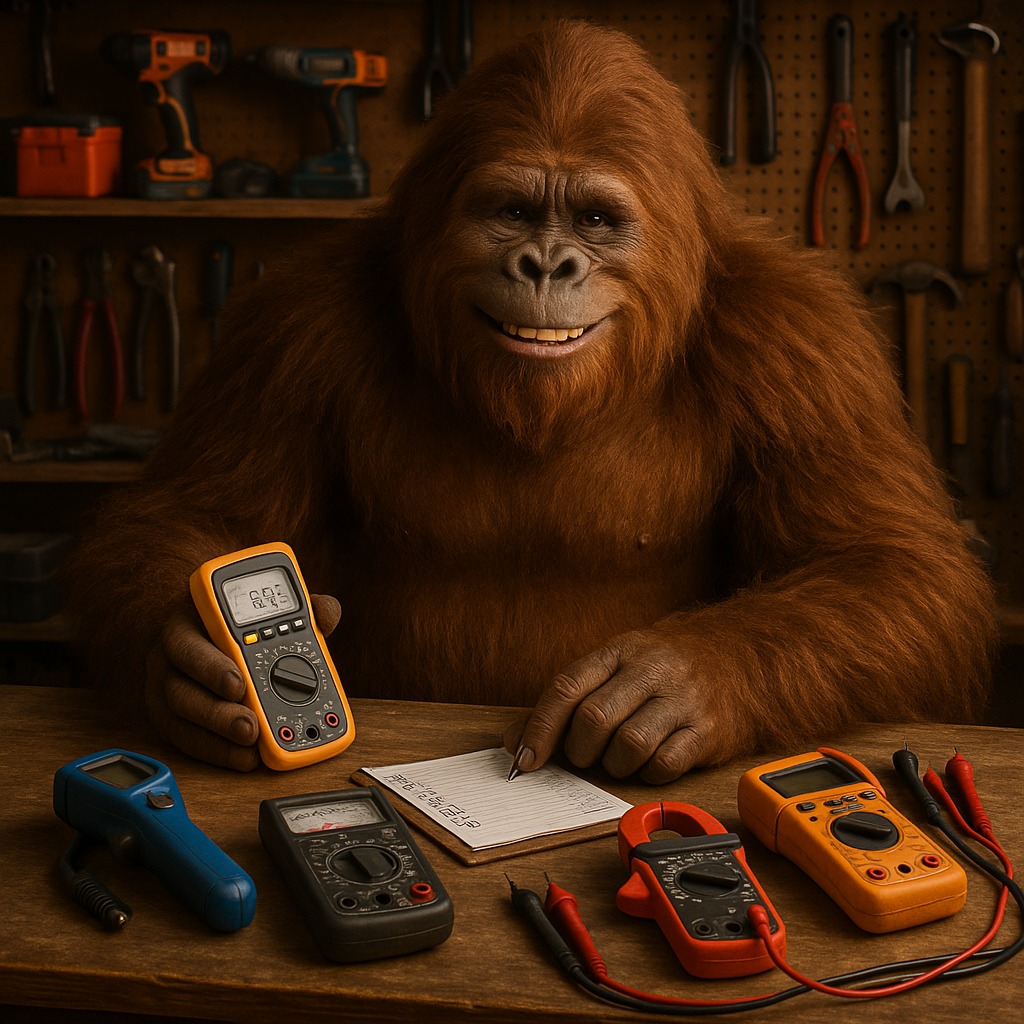
Before touching any solar component, you need the right test equipment. Proper solar installation safety is impossible without verified, calibrated tools.
Required Testing Tools
A Fluke T6-1000 Non-Contact Voltage Tester confirms circuits are de-energized before you touch anything. This is the single most important solar installation safety tool you will own. Test before every connection.
A quality Fluke 117 Electrician's Multimeter measures voltage, current, and resistance accurately. Essential for verifying DC circuits, testing battery health, and troubleshooting.
The Klein Tools Electrician's Tool Kit includes insulated screwdrivers, wire strippers, and crimpers rated for electrical work. Do not use general-purpose tools on electrical connections.
Additional Protection Requirements
- Insulated gloves rated for your system voltage
- Safety glasses for cutting, drilling, or battery work
- Fall protection for any roof work above 6 feet
- Class C fire extinguisher rated for electrical fires
- Lockout/tagout tags for breakers during installation
Food for Thought
A $200 voltage tester has saved more lives than any safety lecture. If you cannot afford proper test equipment, you cannot afford to do the work.
Need Location-Specific Guidance?
Our AI assistant helps identify permit requirements and code specifics for your zip code.
Get Personalized GuidanceUsed by builders who check requirements before they start.
Solar Installation Safety: Cost of Mistakes vs Hiring Pros
Here is the math nobody wants to hear. Ignoring solar installation safety rules creates costs that dwarf any savings from DIY work.
| Mistake Type | Average Cost | Time to Fix |
|---|---|---|
| Improper panel connection | $8,000-15,000 | 3-6 months |
| Code violation discovery | $5,000-25,000 | 1-4 months |
| Structural damage | $15,000-50,000 | 6-12 months |
| Insurance claim denial | $25,000-100,000 | Permanent |
| Medical (electrocution) | $50,000-500,000+ | Lifetime |
What Professionals Actually Cost
| Professional Task | Cost Range |
|---|---|
| Main panel connection | $800-1,500 |
| Permit handling | $500-1,200 |
| Structural analysis | $300-800 |
| Code compliance verification | $1,000-2,000 |
| Total professional cost | $2,600-5,500 |
Compare $2,600 to $5,500 for a licensed pro against $50,000 or more for a single mistake. Solar installation safety is not where you cut corners.
For a detailed cost comparison, see our DIY vs professional installation cost breakdown.
Finding Qualified Solar Installation Professionals
The solar industry has scammers. They take your money and leave dangerous work behind. Protecting your solar installation safety starts with hiring the right people.
Warning Signs to Walk Away
- Door-to-door salespeople with "limited time" pressure
- Full payment demanded before work starts
- No local address or verifiable phone number
- Cannot show current licenses and insurance
- Claims permits are not necessary
- Quotes that seem too good to be true
Signs of a Real Professional
- Current state electrical license (verify with state board)
- Liability and workers compensation insurance
- Local business with established reputation
- Verifiable recent project references
- Detailed written contract with scope of work
- Permit handling included in their price
- NABCEP certification or equivalent
Four-Step Vetting Process
Step 1: Verify license with state licensing board. Active status means they are current.
Step 2: Call their insurance company directly. Verify coverage is active.
Step 3: Get three recent references. Visit a completed project if possible.
Step 4: Get everything in writing. Verbal promises mean nothing when work fails.
Wattson's Take
The cheapest electrician is never the right choice for panel work. The right choice is the one who has done 200 solar interconnections and has the inspection pass rate to prove it.
Your Solar Installation Safety Action Plan
Phase 1: DIY Planning (Weeks 1 to 4)
Handle yourself: system sizing, component selection, equipment purchasing, site assessment, interior cable prep, DC component testing, contractor vetting.
Savings: $3,000 to $8,000.
Phase 2: Professional Installation (Weeks 5 to 8)
Hire licensed pros for: permit applications, structural analysis, main panel connections, grounding installation, utility coordination, system commissioning, final inspection. This is where solar installation safety requires professional hands.
Cost: $2,600 to $5,500. Safety: handled.
Phase 3: DIY Maintenance (Ongoing)
Resume DIY for: daily monitoring, monthly visual inspections, quarterly connection checks, panel cleaning, annual professional inspection scheduling.
For complete maintenance procedures, see our solar panel maintenance schedule and the commissioning safety checks guide.
Expert Perspectives on Solar Installation Safety
"Electrical injuries from DIY work account for over 30,000 non-fatal shock incidents annually, with residential installations being the fastest-growing category."
OSHA, Electrical Safety Standards"Improperly installed photovoltaic systems present fire risks comparable to any other defective electrical installation in residential structures."
NFPA, National Fire Protection Association"Homeowners who use qualified professionals for AC interconnection while performing DC work themselves achieve the best balance of cost savings and safety outcomes."
NABCEP, North American Board of Certified Energy PractitionersSolar Installation Safety FAQ
+What solar installation tasks can I safely do myself?
+Safe DIY: 12V DC wiring, panel mounting prep, component selection, system design, basic maintenance, and interior cable routing. Low voltage means low risk with proper tools.
What solar tasks require a professional?
+Solar installation safety rules require pros for: main panel connections (240V AC), utility work, roof structural modifications, permits, system commissioning, and grounding.
How much do professionals charge for dangerous tasks?
+$2,600 to $5,500 total for panel connection, permits, structural analysis, and code compliance. Far less than the $50,000 or more a single mistake costs.
How do I spot solar installation scammers?
+Red flags: door-to-door pressure, upfront payment demands, no local address, no verifiable license or insurance, claims permits are unnecessary.
What are the deadliest solar installation mistakes?
+Five deadliest: live 240V AC connections, improper grounding, battery wiring errors, structural mounting failures, and code violations that void insurance.
Can I legally install my own solar panels?
+Varies by jurisdiction. Most states allow homeowner DC work. AC connections and grid interconnections typically require licensed electricians. Check local building department first.
What solar installation safety equipment do I need?
+Non-contact voltage tester, insulated gloves, safety glasses, digital multimeter, fall protection for roof work, and Class C fire extinguisher.
What happens if my installation fails inspection?
+Corrections required before system operates. Costs range from $500 for minor fixes to $25,000 or more for rework. Unpermitted systems require full removal during home sales.
Is the hybrid DIY and professional approach worth it?
+Yes. Handle safe tasks yourself to save $3,000 to $8,000. Hire pros for dangerous tasks at $2,600 to $5,500. Total savings of 40 to 60 percent with proper solar installation safety maintained.
How much could a solar installation mistake cost me?
+$8,000 to $15,000 for wiring errors. $5,000 to $25,000 for code violations. $25,000 to $100,000 for insurance denials. $50,000 to $500,000 for electrocution injuries.

Main Takeaway
Solar installation safety is not about doing everything yourself or hiring everything out. It is about drawing the line where the risk changes from "save money" to "save your life."
Green zone tasks save thousands. Red zone tasks cost $2,600 to $5,500 for a licensed pro. One mistake on the red zone costs $50,000 or more. The math was never complicated. The ego was.
Ready to Plan Your Installation?
See the complete maintenance and troubleshooting guide for keeping your system safe and running after installation.
View Maintenance GuideLast Updated: February 2026 | Sources: OSHA, NFPA, NABCEP, CPSC | Originally published June 2025