 TARIFF ALERT: Solar prices rising 25-40% in 2025 - Secure American-made independence NOW
for American Patriots
Survival Garden Guide: 8 Crops That Keep You Fed Year-Round
This survival garden guide covers the crops that actually matter—calorie-dense vegetables that store for months without electricity. Forget decorative gardens. This is about turning dirt into food security when the grocery store shelves go empty.
The Year My Survival Garden Saved Us
2020 taught a lot of people hard lessons. Empty grocery shelves. Meat rationing. Supply chain chaos. But my family ate fresh vegetables every week because of a survival garden I'd started three years earlier. Potatoes in the root cellar. Canned tomatoes. Dried beans by the bucketful.
The neighbors who laughed at my "survivalist hobby" stopped laughing when they couldn't find flour. Some of them are growing their own food now. They learned what I learned years ago: a survival garden isn't paranoia. It's insurance that pays dividends in fresh food.
Location: 6-8 hours sun, water access, good drainage.
Soil: Amend heavily with compost. Raised beds or in-ground both work.
Top Crops: Potatoes, winter squash, dried beans, hardy greens, root vegetables.
Seeds: Open-pollinated/heirloom only. Learn to save seeds.
Size: Start with 200-400 sq ft. Expand as you learn.
Storage: Root cellar, canning, drying, freezing (if power available).

Survival Garden Site Selection
Sunlight Is Non-Negotiable
Most food crops need 6-8 hours of direct sunlight daily. That shady spot under the oak tree won't grow tomatoes. Watch your property throughout the day before committing to a location. Southern exposure typically provides the most consistent light.
Water Access Matters
How will you water your survival garden when it doesn't rain? Proximity to hose bib, rain barrel, well, or cistern determines whether gardening is manageable or miserable. Lugging water 200 feet gets old fast. Plan your layout around water access.
Drainage
Avoid low spots where water puddles after rain. Roots hate soggy soil—most vegetables will rot. A gentle slope is ideal. If your property is flat and clay-heavy, raised beds solve the drainage problem.
Security Considerations
Do you want your survival garden visible from the road? In normal times, it's just vegetables. In hard times, it's a food supply that might attract unwanted attention. Consider placement and fencing for both animal pests (deer, rabbits) and potential human problems.
Wattson's Survival Garden Soil Rule
Crap soil equals crap results. Before you plant anything, invest in your dirt. Compost, aged manure, leaf mold—organic matter is the single best thing you can add. It improves drainage in clay, improves water retention in sand, and feeds the soil biology that feeds your plants.
Survival Garden Soil Preparation
Get a Soil Test
Your local extension office does cheap soil tests ($15-25). Tells you pH and nutrient levels so you know what you're working with. Don't guess. Test. It saves money on amendments you might not need and identifies deficiencies you'd miss otherwise.
Amend Aggressively
Most soil needs help. Add 2-4 inches of compost annually. Work in aged manure (never fresh—it burns plants). Leaf mold, grass clippings, and cover crops all build organic matter over time. The goal is dark, crumbly soil that smells earthy and holds moisture without staying soggy.
Raised Beds vs. In-Ground
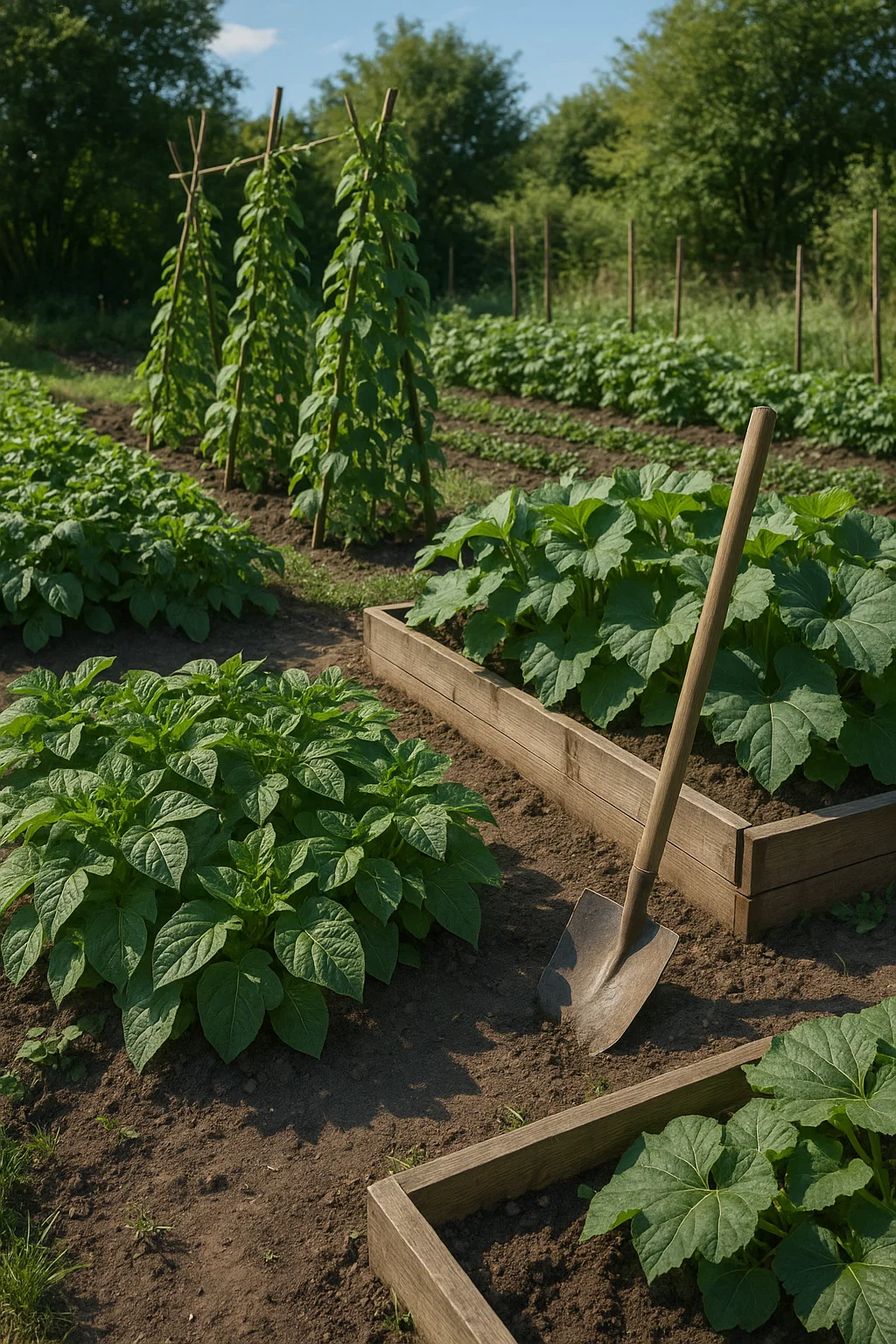
Raised beds: Better drainage, warm up faster in spring, control soil mix precisely. Cost more time and money to build. Great option for clay soil or bad backs.
In-ground: Works fine if you have decent existing soil you can amend. Lower cost, more space flexibility. Better for large-scale survival garden production.
Both approaches work for a survival garden. Choose based on your soil, budget, and physical abilities.
The Grandpa's Garden Wisdom
My grandfather never heard the term "survival garden." He just called it "the garden." His generation grew food because that's what you did. They knew which crops stored through winter. They saved seeds. They didn't depend on grocery stores that didn't exist. We're just relearning what our grandparents knew.
Survival Garden Crops: The Essential 8
Forget fussy hybrids that need constant pampering. A survival garden prioritizes crops that provide calories, store well, and allow seed saving. Here are the eight crops every survival garden should include:
1. Potatoes & Sweet Potatoes
Why: Calorie kings. A single plant produces 5-10 pounds of food. Store for months in cool, dark conditions without processing. Grow in small spaces using bags, towers, or traditional rows. Plant in spring, harvest before frost.
2. Winter Squash
Why: Butternut, acorn, spaghetti squash, and pumpkins store 3-6 months at room temperature without canning or freezing. High in calories and nutrients. Vigorous growers that produce heavy yields. Harvest when stems dry and cure for long storage.
3. Dried Beans
Why: Protein powerhouses. Dried beans store practically forever in sealed containers. Easy to grow, prolific producers. Bonus: beans fix nitrogen in soil, improving it for next year's crops. Let pods dry on the plant, then thresh and store.
4. Hardy Greens
Why: Kale, collards, and Swiss chard provide essential nutrients most stored foods lack. Tolerate cooler weather—often the first and last crops of the season. "Cut and come again" harvesting extends production. Kale survives frost and actually tastes better after cold weather.
5. Root Vegetables
Why: Carrots, beets, turnips, and parsnips store in the ground under heavy mulch or in root cellars. No processing required. High in calories and nutrients. Parsnips and carrots sweeten after frost. Plant in early spring or late summer for fall harvest.
6. Garlic & Onions
Why: Flavor staples that store 6-12 months when properly cured. Easy to grow—plant garlic in fall, onions in early spring. Dry thoroughly before storage. Every survival garden needs these for making bland storage foods palatable.
7. Tomatoes
Why: The gateway crop for most gardeners. Easy to can, dry, or sauce for long-term storage. High-yielding with proper care. Choose paste varieties (Roma, San Marzano) for preservation, slicers for fresh eating. Save seeds from open-pollinated varieties.
8. Corn (Dent/Flint)
Why: Not sweet corn—dent or flint corn for grinding into cornmeal and flour. Stores indefinitely as dried kernels. Needs more space and good soil, but provides calorie-dense grain. Plant in blocks (not rows) for proper pollination.
Recommended: Heirloom Seed Collections
Start your survival garden with seeds you can save year after year. Food preservation books teach the techniques for storing your harvest.
FREE Emergency Food Supply Checklist
Your survival garden is part of a complete food security plan. Get the full checklist for building your emergency food supply.
GET FREE CHECKLISTSurvival Garden Basic Care
Water Wisely
Most survival garden crops need about 1 inch of water per week from rain or irrigation. Water deeply and less often rather than shallow daily sprinkles. Morning watering is best—leaves dry before evening, reducing disease. Mulch heavily to retain moisture and suppress weeds.
Weed Ruthlessly
Weeds steal water, nutrients, and sunlight from your crops. Get them when they're small—a hoe slice takes seconds. Left alone, they'll choke your survival garden. Mulch helps suppress weeds, but you'll still need to patrol regularly.
Pest & Disease Patrol
Inspect plants regularly. Hand-pick larger bugs (squash bugs, tomato hornworms). Use row covers to exclude certain pests. Encourage beneficial insects by planting flowers nearby. Healthy soil produces healthier, more resilient plants that resist disease better.
Read the Seed Packet
The seed packet tells you when to plant (after last frost?), how deep, and how far apart. Follow it. Those instructions exist because they work. Keep a garden journal to track what succeeds and what fails in your specific conditions.
Wattson's Seed Saving Rule
Buying seeds every year makes you dependent. Learn to save seeds from open-pollinated or heirloom varieties—they breed true. Start easy: beans, peas, tomatoes, peppers. Let them mature fully on the plant, collect seeds, dry thoroughly, store cool and dark. You'll have free seeds adapted to your specific conditions forever.
Survival Garden Seed Saving
The ultimate act of survival garden self-reliance is saving your own seeds. It closes the loop. No more dependence on seed companies that might not exist or ship during a crisis.
Why Open-Pollinated Matters
Seeds from F1 hybrids don't produce plants like the parent. They're a dead end. Open-pollinated and heirloom varieties breed true—save the seeds, plant next year, get the same crop. This is how humans grew food for thousands of years before modern hybrids.
Easy Crops for Beginners
Beans & Peas: Let pods dry completely on plant. Shell, dry further, store.
Tomatoes: Ferment the gel coating off seeds, rinse, dry.
Peppers: Let fruits ripen fully, scrape out seeds, dry.
Squash: Scoop seeds from mature fruit, wash, dry flat.
Storage
Dried seeds keep for years in cool, dark, dry conditions. Use airtight jars with silica gel desiccant packs. Label everything with variety name and year saved. Test germination rate every few years by sprouting a sample on damp paper towels.
What are the best crops for a survival garden?
Focus on calorie-dense crops that store well: potatoes, winter squash, dried beans, root vegetables (carrots, beets, turnips), hardy greens (kale, collards), garlic, onions, and dent corn. Choose open-pollinated varieties so you can save seeds.
How much space do I need for a survival garden?
Start with 200-400 square feet to learn the basics. A 1,000 square foot survival garden produces significant food for one person. For a family of four pursuing partial self-sufficiency, plan for 2,000-4,000 square feet eventually, but start smaller and expand.
Can I grow a survival garden in poor soil?
Yes, with effort. Add organic matter aggressively—compost, aged manure, leaf mold. Raised beds let you control soil mix completely. A soil test identifies specific problems. Most "poor" soil improves dramatically with consistent amendment over 2-3 years.
What's the difference between heirloom and hybrid seeds?
Heirloom (open-pollinated) seeds produce plants like the parent—you can save seeds. Hybrid (F1) seeds are crosses that don't breed true—saved seeds produce unpredictable results. For a survival garden, always choose heirloom/open-pollinated varieties.
How do I preserve my survival garden harvest?
Multiple methods work: root cellaring (potatoes, carrots, squash), canning (tomatoes, beans, pickles), drying (beans, corn, herbs), and freezing (if power is available). Most survival garden crops store naturally without processing. See our Food Preservation Guide.
When should I start a survival garden?
Now. Even if it's winter, you can plan, prepare beds, and order seeds. Plant cool-weather crops (peas, lettuce, kale) as soon as soil can be worked. Warm-weather crops (tomatoes, peppers, squash) go in after last frost. The best time to start was last year. The second best time is today.
Plant Your Survival Garden Today
A survival garden is more than vegetables. It's cultivating resilience. It takes work, planning, and learning from inevitable mistakes. But the reward—fresh food you grew yourself, independent of supply chains and grocery stores—is worth every blister and sunburn.
Start small. Focus on reliable calorie crops. Build healthy soil. Learn basic care. Even a few productive beds provide a buffer against uncertainty. Stop being just a consumer. Become a producer.
The family with a survival garden doesn't panic when shelves go empty. They eat from the root cellar, open another jar of canned tomatoes, and cook dried beans. Be that family.
Affiliate Disclosure: We earn commissions from qualifying Amazon purchases. This doesn't affect our recommendations—we only feature products we personally use and trust. See our full disclosure.