 TARIFF ALERT: Solar prices rising 25-40% in 2025 - Secure American-made independence NOW
Portable Solar Panels: Beginner's Guide to Picking Right
No jargon. No confusion. Just clear answers about which portable solar panels actually work for camping, emergencies, and off-grid power.
For Patriots Starting Their Off-Grid Journey
Portable solar panels for beginners:
- Best Value: Renogy 100W Starter Kit
- Best Premium: Goal Zero systems
- Best for Beginners: Jackery SolarSaga 100W
- Best Whole-House: Anker SOLIX F3800
Start with 100W for camping. Add a power station for 24/7 backup. Monocrystalline cells perform best. Quality panels last 10-25 years.
You have watched the news. Grid failures happening more often. Storms knocking out power for days. Your neighbors scrambling for generators and fuel. You know you need backup power. The question is where to start. This guide gives you that starting point.
Free Solar System Sizing Calculator
Not sure what size system you need? This calculator shows you exactly what to buy.
Get Free CalculatorWhat Are Portable Solar Panels?
Portable solar panels convert sunlight into electricity you can use anywhere. They fold or roll for easy transport. Unlike rooftop panels, you take them wherever you go.
Think of them as a fuel-free generator. No gas. No noise. Just sunlight and reliable power.
Most portable solar panels range from 50W to 200W output. A 100W panel charges smartphones in 1-2 hours. Laptops take 3-4 hours under good sunlight.
Who Uses Portable Solar Panels?
Campers and RVers: Power devices without hookups or generators.
Emergency preppers: Backup power when the grid fails.
Off-grid beginners: Test solar before committing to a full system.
Outdoor workers: Charge tools and devices in remote locations.
How Do Portable Solar Panels Work?
Solar cells capture photons from sunlight. These photons knock electrons loose. The movement creates electrical current.
That current flows through wires to your device or battery. A charge controller regulates the flow. This prevents overcharging and damage.
Key Components
Solar cells: The actual power generators. Monocrystalline cells work best.
Frame or backing: Protects cells and provides structure. Rigid or flexible.
Connectors: Link panel to devices or power stations. MC4 is standard.
Charge controller: Some panels include one. Others require separate purchase.
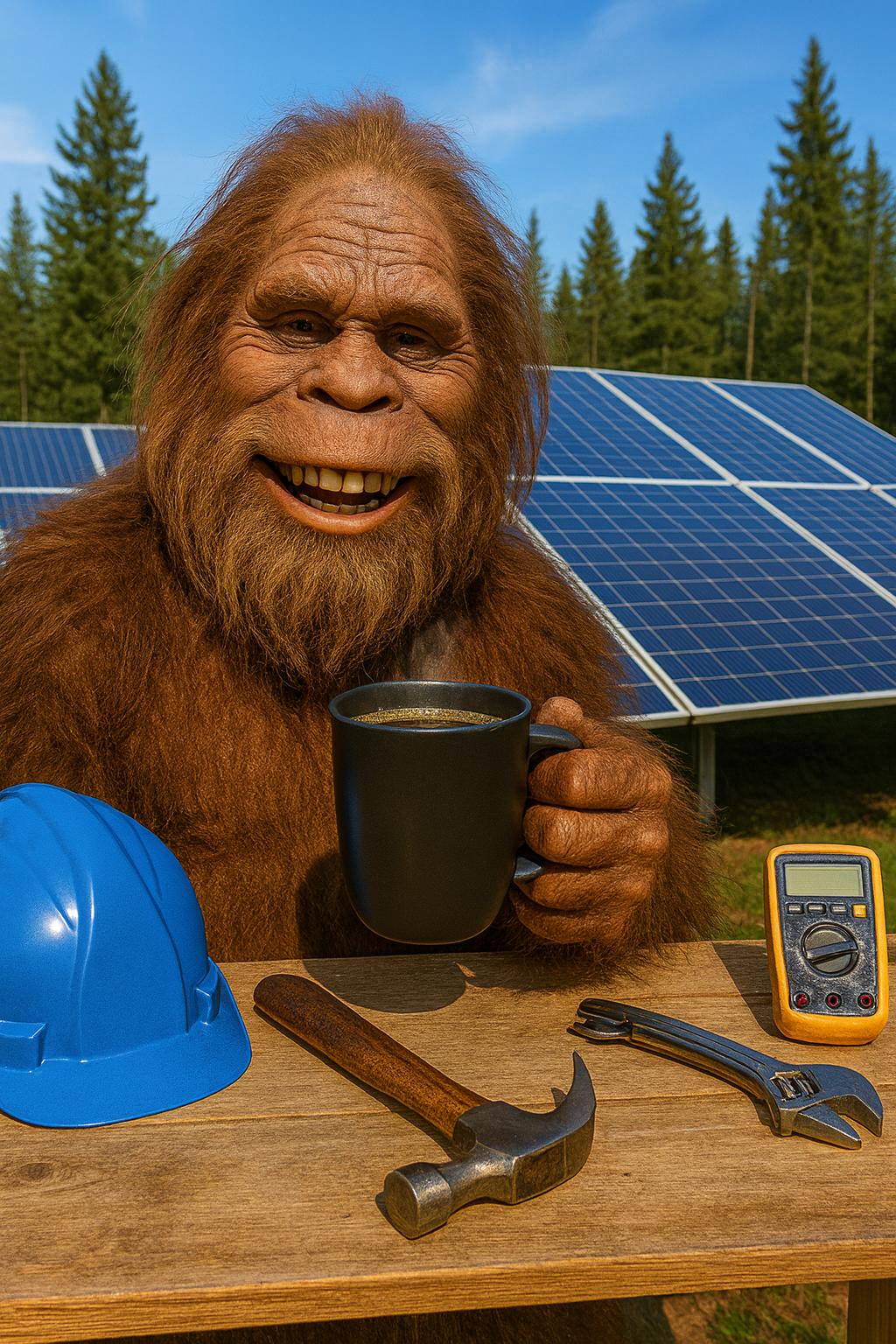
WATTSON'S BEGINNER TIP: "Panels alone are half a system."
A portable solar panel without a battery is a daytime-only solution. The sun goes down, your power stops. Pair your panel with a power station for 24/7 backup. That combination creates real energy independence.
Types of Portable Solar Panels
Understanding the differences helps you choose right the first time.
Rigid vs Foldable
| Feature | Rigid Panels | Foldable Panels |
|---|---|---|
| Efficiency | Higher (18-22%) | Lower (15-18%) |
| Durability | Very durable | Good with care |
| Weight | Heavier | Lighter |
| Portability | Bulky | Compact |
| Best For | RVs, base camps | Backpacking, travel |
Cell Types Explained
Monocrystalline: Best efficiency. Works better in low light. Costs more but worth it.
Polycrystalline: Decent efficiency. Cheaper but larger for same output. Blue appearance.
Thin-film: Flexible but lowest efficiency. Rarely worth it for portable use.
For portable solar panels, monocrystalline delivers the best balance of size and power.
What Size Portable Solar Panel Do You Need?
Size depends on what you want to power. Here is a practical breakdown.
| Use Case | Recommended Size | Can Power |
|---|---|---|
| Phone/tablet only | 20-30W | Small devices |
| Weekend camping | 50-100W | Phones, lights, fans |
| Extended camping | 100-200W | Laptop, small cooler |
| Emergency backup | 200W+ | Multiple devices |
| Whole house backup | 400W+ (multiple panels) | Fridge, lights, devices |
Most beginners start with 100W. This size handles camping needs and charges power stations efficiently.
Every watt you generate is a watt you do not buy from the utility. Every hour of backup power is an hour your family stays comfortable during outages. The investment pays for itself. The independence? Priceless.
Top Portable Solar Panels Compared
After testing multiple options, these four stand out for different needs.
1. Renogy 100W Starter Kit - Best Value
Why Beginners Love It: Complete kit with everything needed to start. Monocrystalline cells deliver strong output. Built-in charge controller simplifies setup.
- 100W monocrystalline panel
- Includes charge controller
- Durable aluminum frame
- 25-year power warranty
- Works with 12V battery systems
Pros: Excellent value, complete kit, proven reliability
Cons: Connectors take practice to master
2. Goal Zero - Best Premium Quality
Why Serious Users Choose It: Exceptional build quality. Seamless ecosystem integration. Designed for harsh conditions.
- Superior construction quality
- Lightweight for the output
- Pairs with Goal Zero power stations
- Weather-resistant design
- Excellent customer support
Pros: Premium quality, complete ecosystem, great warranty
Cons: Higher price point
3. Jackery SolarSaga 100W - Best for Beginners
Why New Users Start Here: Easiest setup in the category. One cable connection. Works perfectly with Jackery power stations.
- Simple plug-and-play design
- Foldable with carrying handle
- Pairs with Jackery power stations
- Kickstand included
- IP65 water resistance
Pros: Easiest setup, reliable performance, great for families
Cons: Optimized mainly for Jackery products
4. Anker SOLIX F3800 - Best Whole-House System
Why Preppers Choose It: This goes beyond portable panels. Complete backup system with 3840Wh capacity. Powers refrigerators and medical devices.
- 3840Wh battery capacity
- 3200W continuous output
- Expandable to 26.9kWh
- 120V/240V output options
- 5-year warranty
Pros: Massive capacity, handles heavy loads, serious backup
Cons: 132 lbs - not portable in traditional sense, significant investment
Pairing Portable Solar Panels with Power Stations
Panels generate power. Batteries store it. The combination creates true backup capability.
Recommended Pairings
Weekend camping: 100W panel + 300-500Wh power station
Extended trips: 200W panel + 1000Wh power station
Emergency backup: 400W+ panels + 2000Wh+ power station
What to Look For
Input compatibility: Ensure panel voltage matches station input range.
Charge time: Higher wattage panels charge faster.
Output ports: Match station outputs to your device needs.
WATTSON'S PAIRING TIP: "Size up, not down."
Every off-gridder wishes they bought more capacity. Your power needs grow. That "extra" becomes baseline within months. Buy more than you think you need today. Future you will be grateful.
Common Beginner Mistakes to Avoid
Learning from others saves time and money. These mistakes happen most often.
Mistake #1: Buying Panel Only
Panels without batteries provide daytime power only. When clouds roll in or sun sets, power stops. Always budget for a power station.
Mistake #2: Wrong Expectations
Rated wattage requires perfect conditions. Expect 60-80% of rated output in real use. A 100W panel typically produces 60-80W.
Mistake #3: Ignoring Shade
Even partial shade dramatically reduces output. One shaded cell affects the entire panel. Position carefully throughout the day.
Mistake #4: Skipping the Math
Calculate actual power needs before buying. Guessing leads to undersized systems. Use our calculator to get it right.
Mistake #5: Cheapest Option
Budget panels use lower quality cells. They degrade faster and produce less power. Quality panels cost more but last 10-25 years.
What size portable solar panel do beginners need?
+Most beginners start with 100W. This size charges phones in 1-2 hours and laptops in 3-4 hours. It balances power output with portability.
Do portable solar panels work on cloudy days?
+Yes, but expect 10-25% of rated power on overcast days. Monocrystalline panels perform better in low light than other types.
Can portable solar panels charge a car battery?
+Yes, with a charge controller. A 100W panel can maintain or slowly recharge a car battery. Never connect directly without regulation.
How long do portable solar panels last?
+Quality panels last 10-25 years. They degrade about 0.5-1% annually. Most carry 5-10 year warranties.
Rigid vs foldable: which is better?
+Rigid panels offer higher efficiency and durability. Foldable panels pack smaller. Choose based on whether portability or efficiency matters more.
Do I need a battery with portable solar panels?
+For consistent power, yes. Without a battery, panels only work during sunlight. A power station stores energy for nighttime use.
Are expensive portable solar panels worth it?
+Premium panels offer better efficiency, durability, and warranties. For emergency prep or frequent use, quality pays for itself over time.
Can I connect multiple panels together?
+Yes. Parallel for more amps, series for higher voltage. Match specifications and check charge controller limits before combining.
What should I look for when buying?
+Key factors: wattage output, cell type (monocrystalline preferred), weight, durability rating, warranty length, and connector compatibility.
Do portable solar panels need direct sunlight?
+Direct sunlight produces maximum output. Panels work in shade at reduced capacity. Aim directly at sun and adjust angle throughout day.
Conclusion: Start Your Solar Journey
Portable solar panels offer the easiest entry into energy independence. No permits. No installation. Just unfold, point at the sun, and generate power.
For most beginners, the Renogy 100W Starter Kit delivers the best value. Pair it with a power station for 24/7 backup capability.
The grid will fail again. Storms will knock out power. When that happens, your portable solar panel keeps your family comfortable while neighbors sit in the dark.
Free: Location-Specific Solar Guidance
Need to know permit requirements for your area? Sun hours in your zip code? Local regulations? Our GPT tool answers location-specific questions instantly.
Use Free GPT ToolDisclosure: We may earn a commission from qualifying purchases. We only recommend products we have tested.